
Quick Quotes
This guide provides detailed instructions for employee training within Travelify and your website, to create personalised Quick Quotes for your customers
Go to www.travelify.io
1. Introduction
Before we start, if you wish to see subtitles in addition to the voiceover then please ensure "Captions" are enabled on your screen
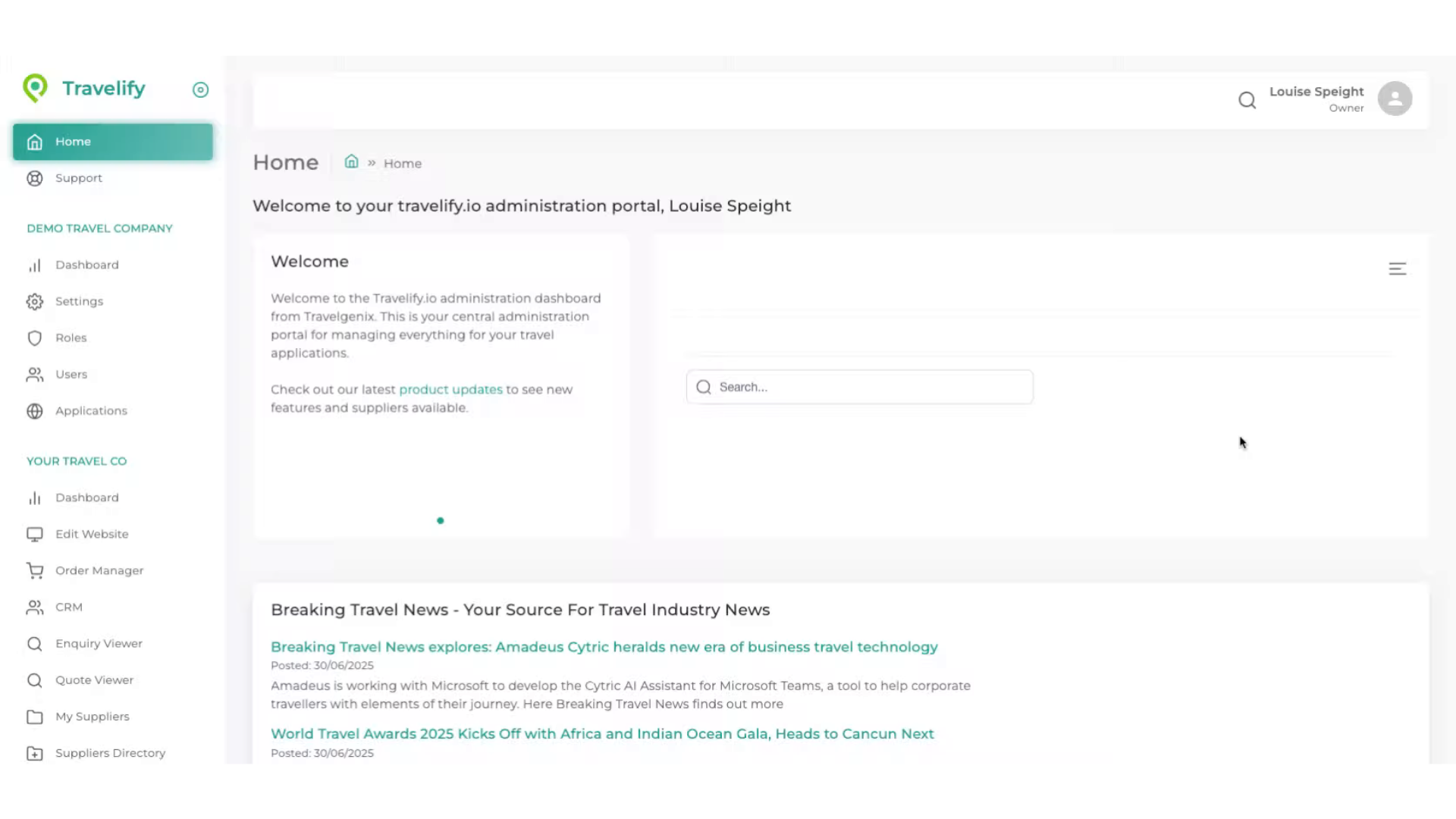
2. To fully personalise the quotes we first need to ensure that the User has added all their details
To fully personalise the customer quotes we first need to ensure that the User has added all their details

3. Select the User to add more details if needed
Select the User to add more details if needed
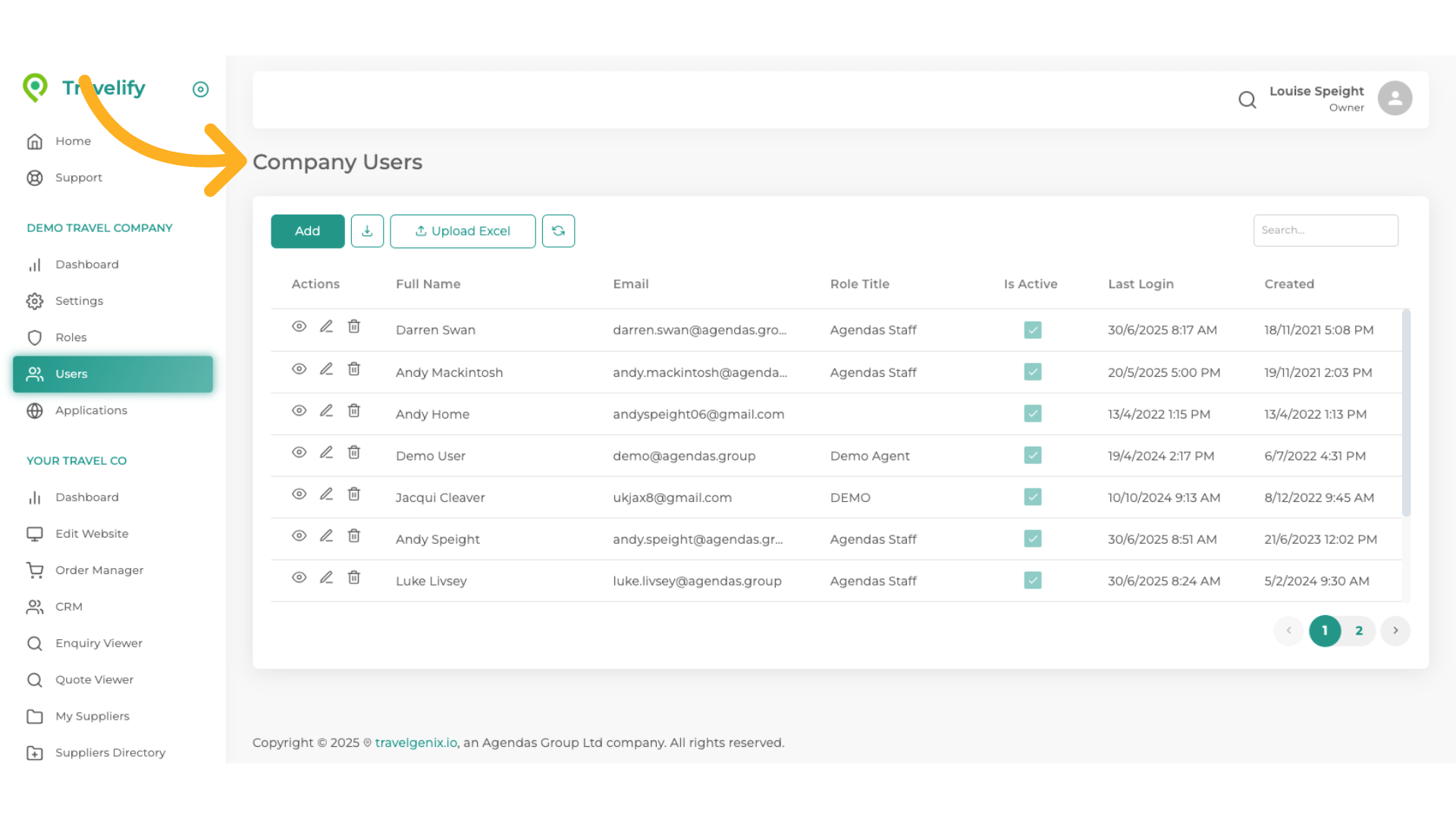
4. Click on the Edit icon
Click on the Edit icon

5. Begin filling in fields
Begin filling in the empty fields, the contents of these will be seen by the customer

6. Fill in
Fill in "Travel Consultant"
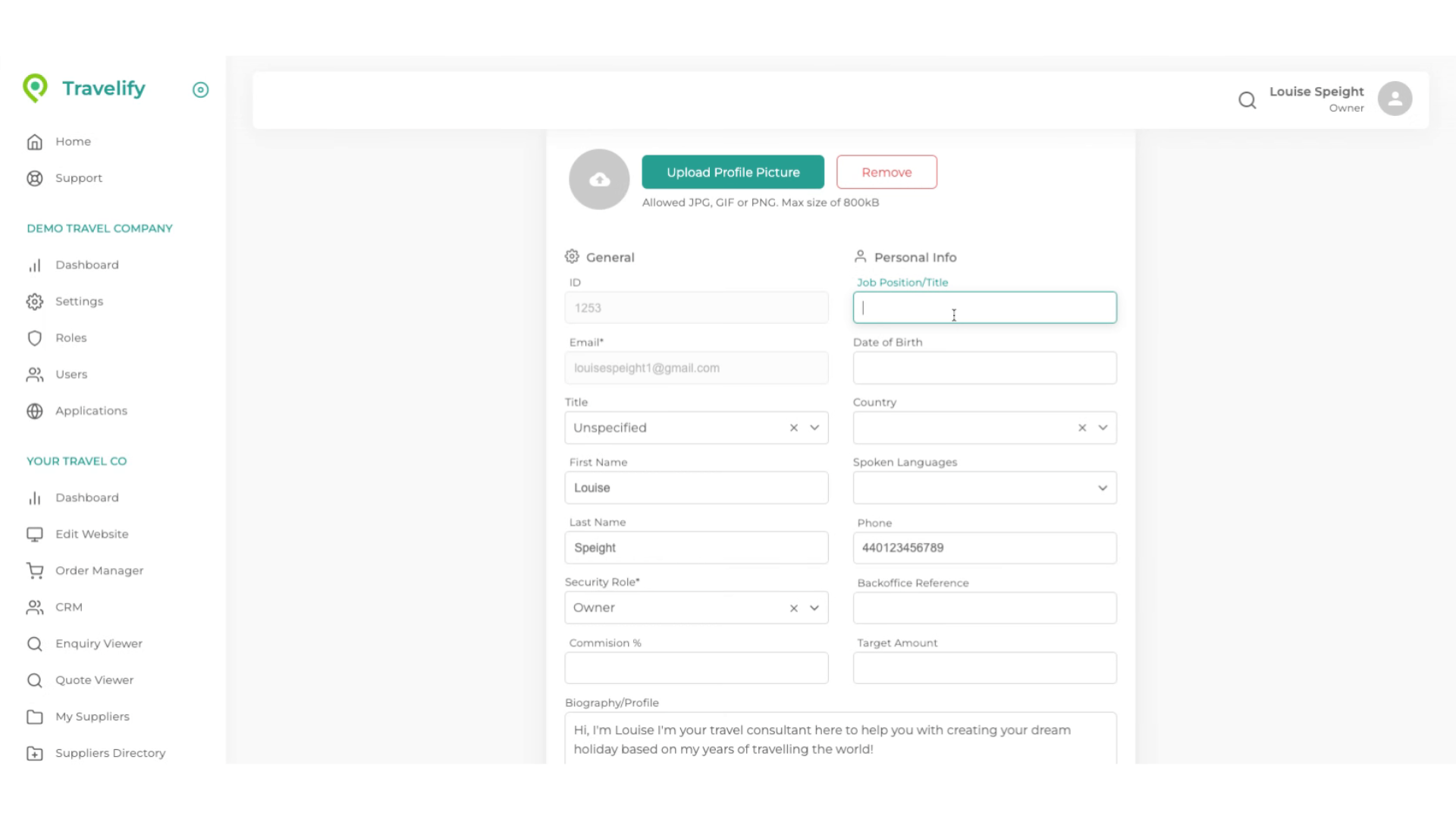
7. Add as much detail as you wish
Add as much detail as you wish
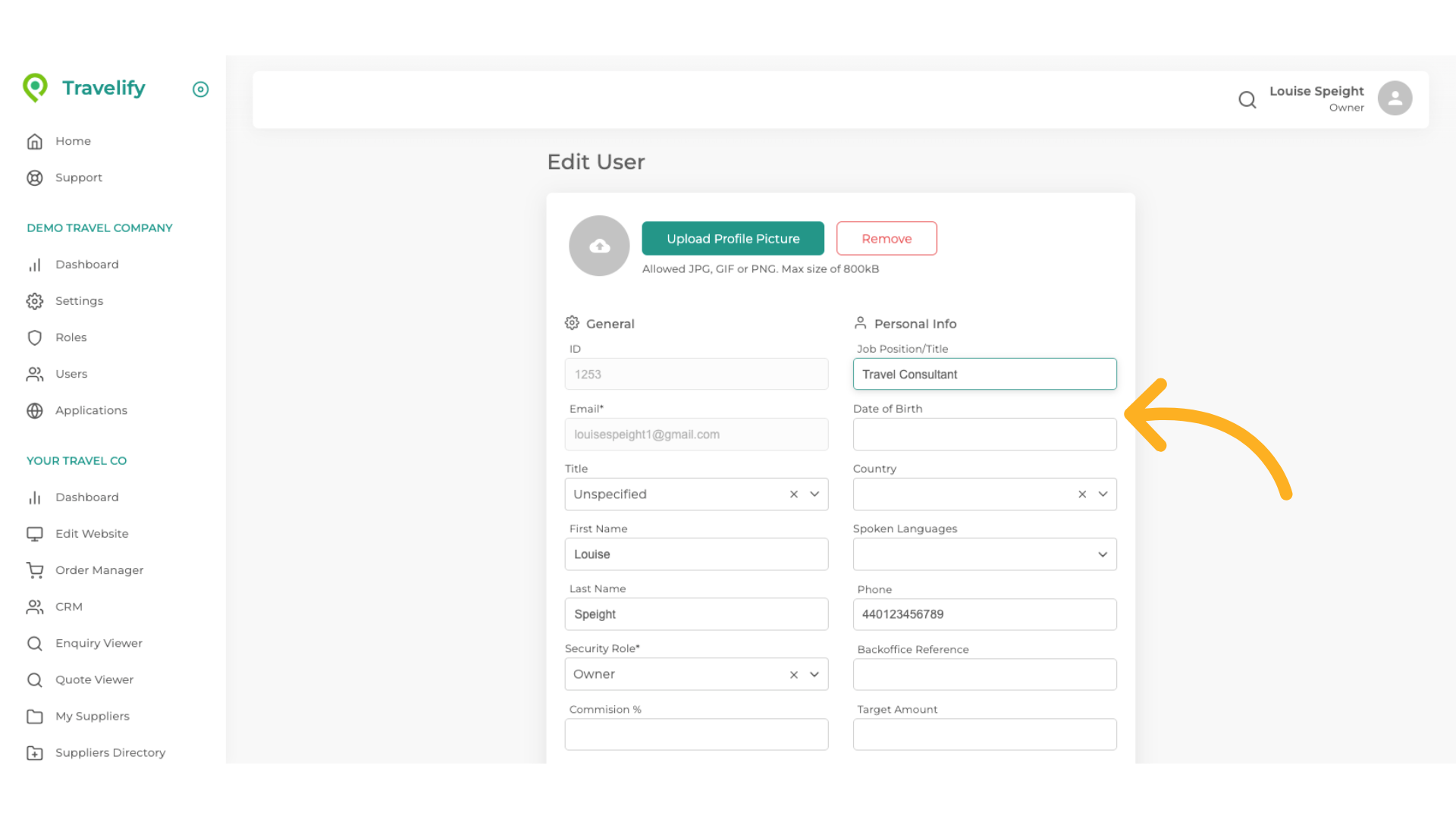
8. You can upload a Profile Picture
You can Upload a Profile Picture
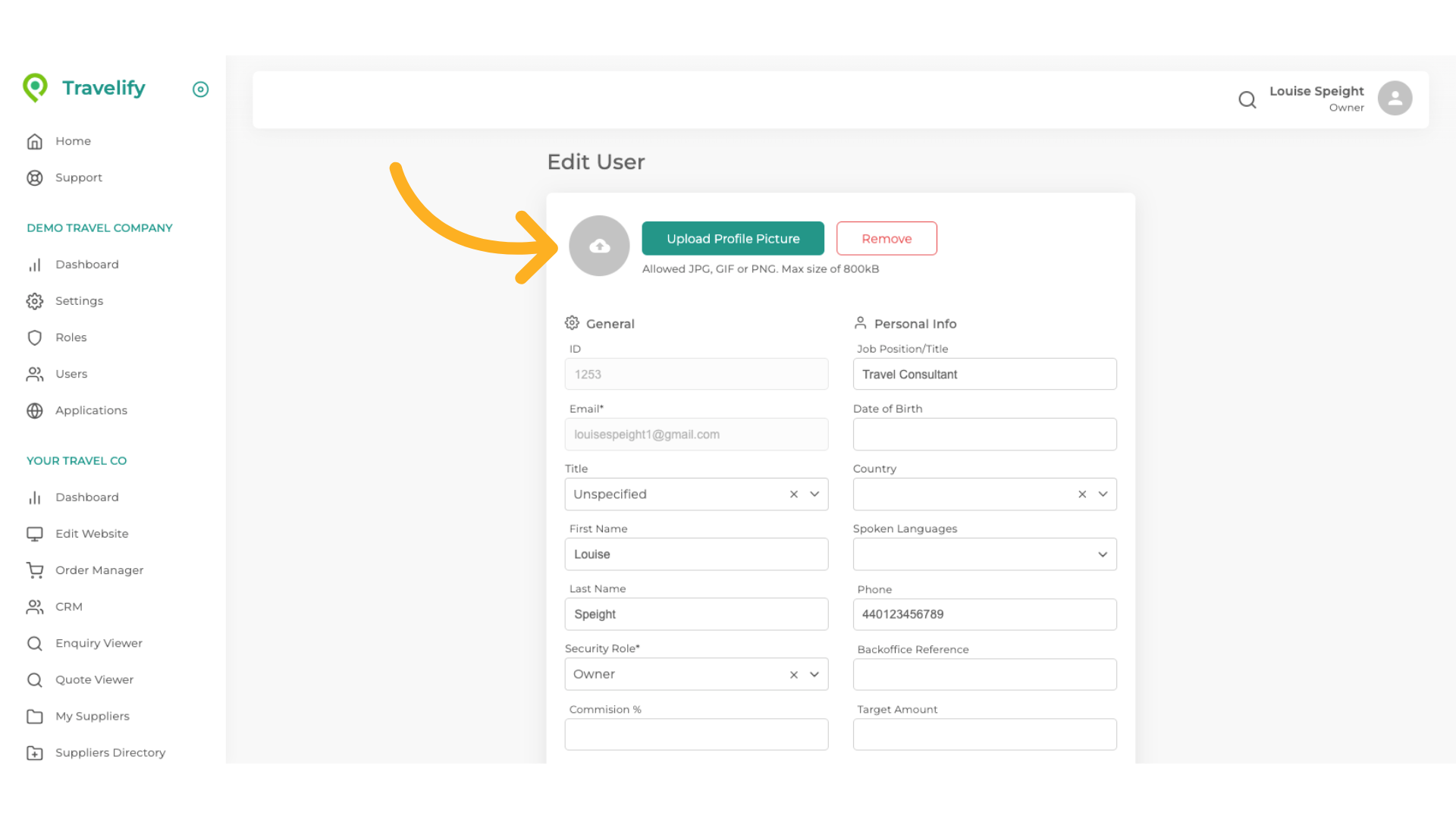
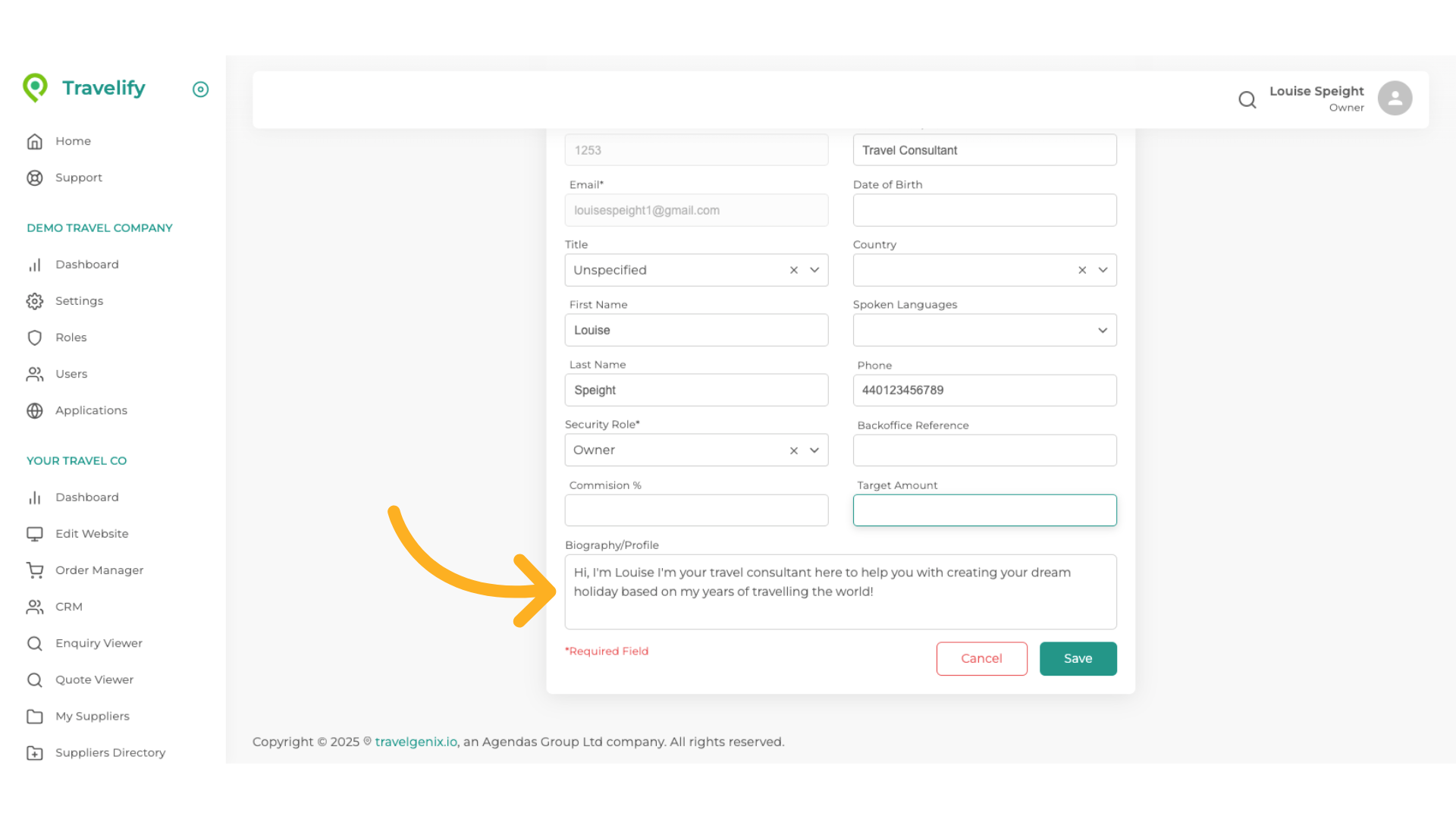
9. And complete a short biography
And complete a short biography
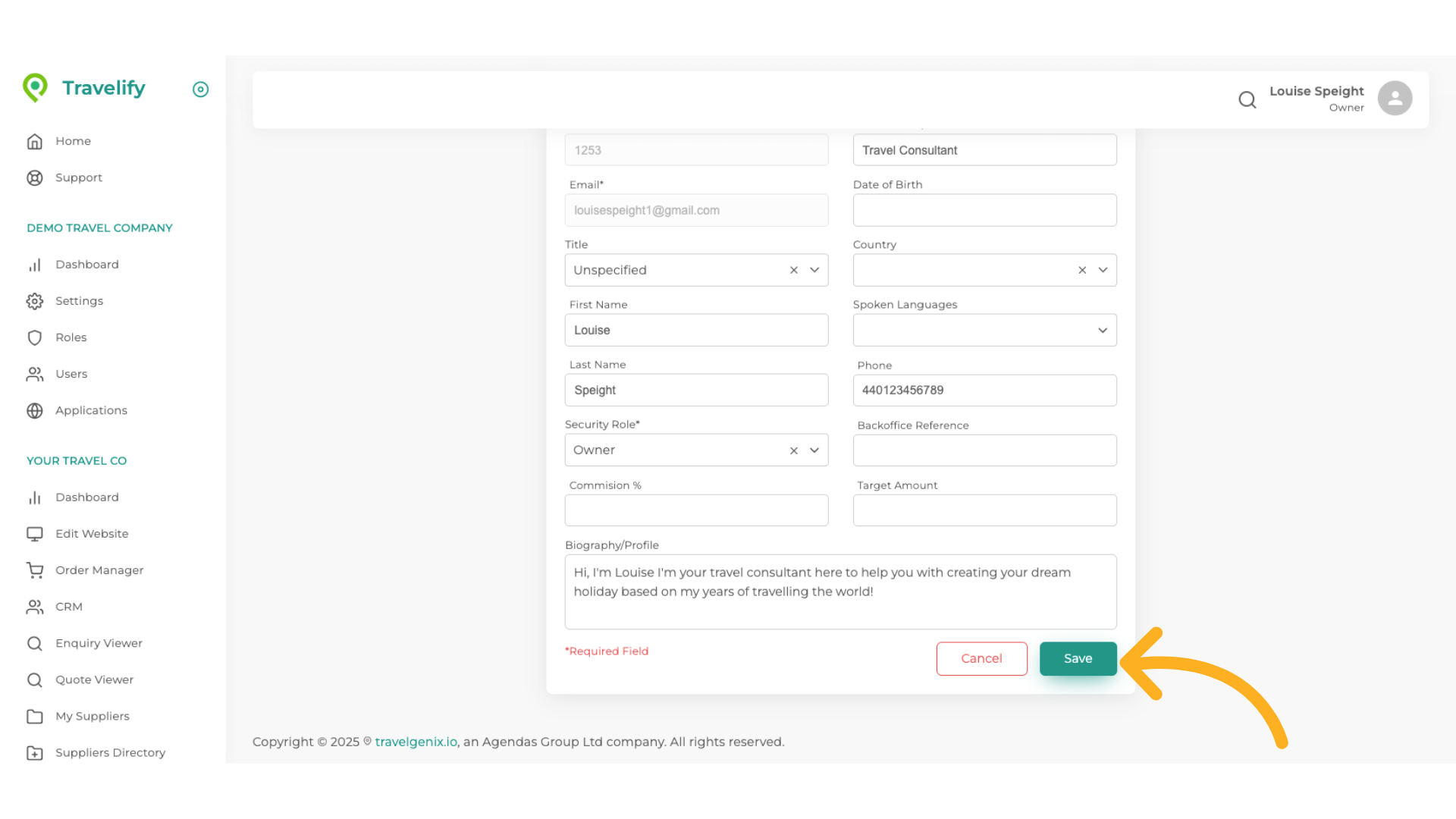
10. Click "Save"
Save changes made.
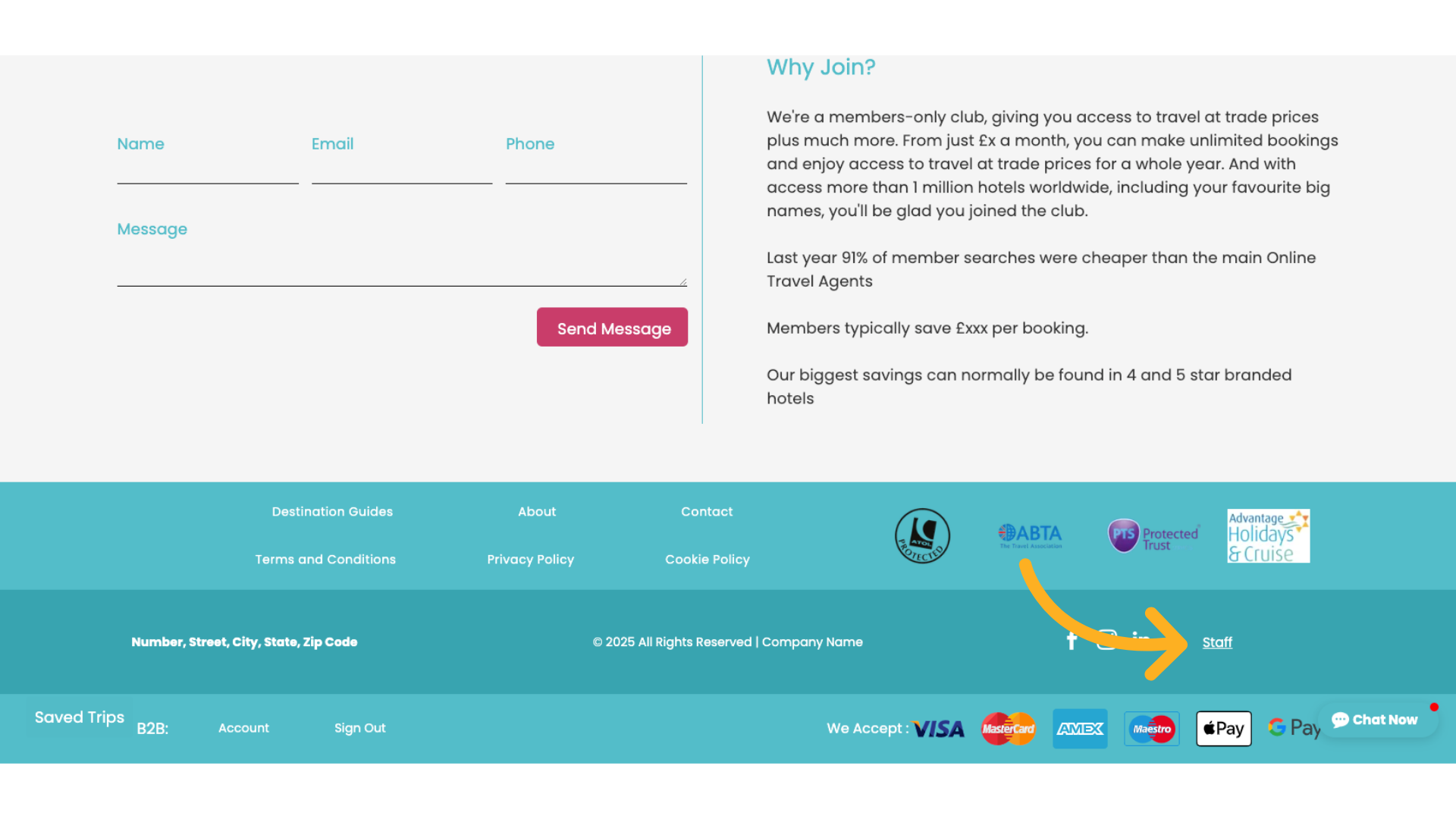
11. Now go to your website to access the "Staff" section
Now go to your website to access the "Staff" section
Log in using the same details as you use to access Travelify
12. Initiate a search for the desired contents of your quote
Initiate a search for the desired contents of your quote that you are wanting to send to your customer
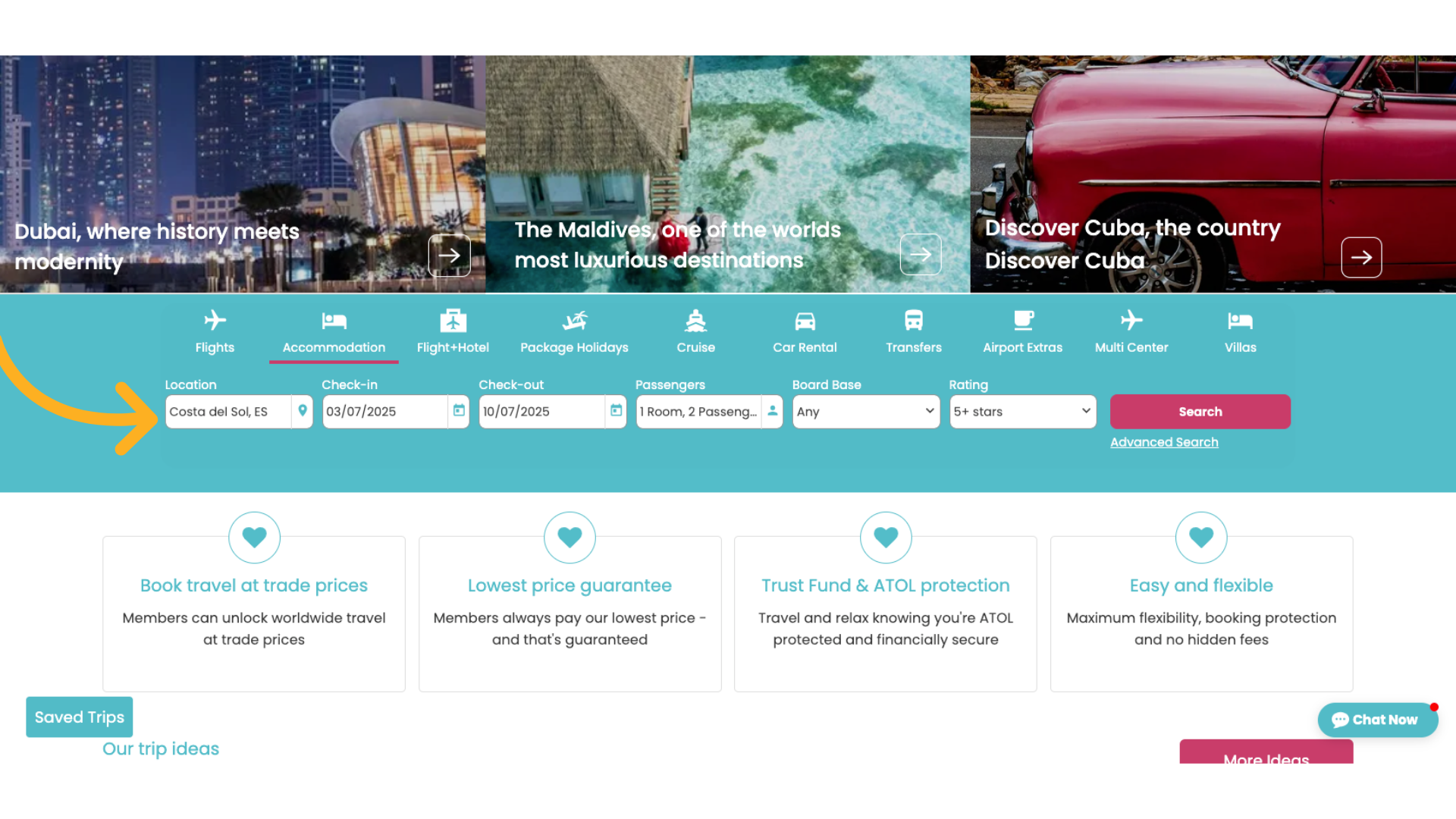
13. Click here
Choose this option.
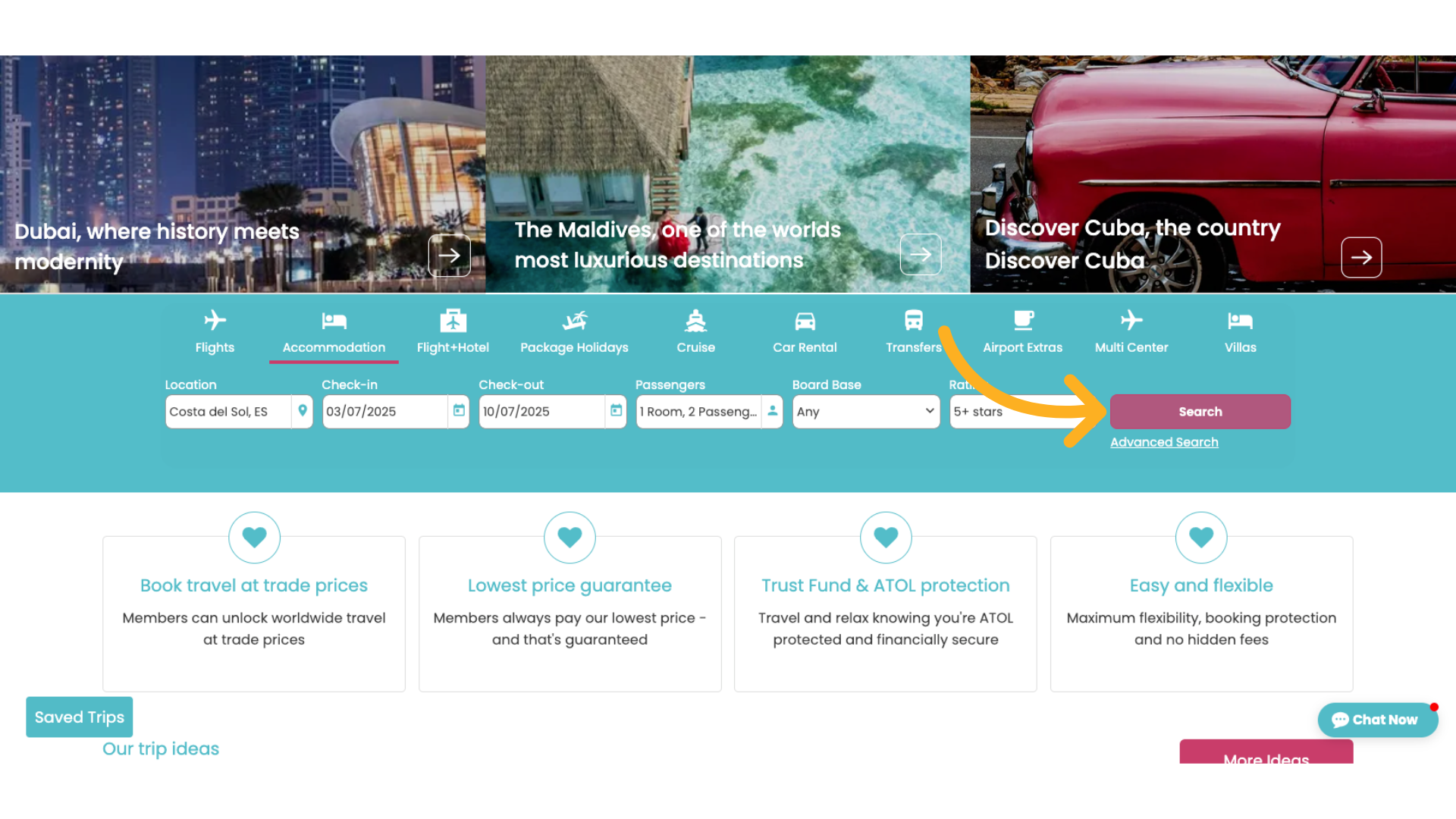
14. Once the results have populated we can now select the information we want to add to our quote
Once the results have populated we can now select the information we want to add to our quote
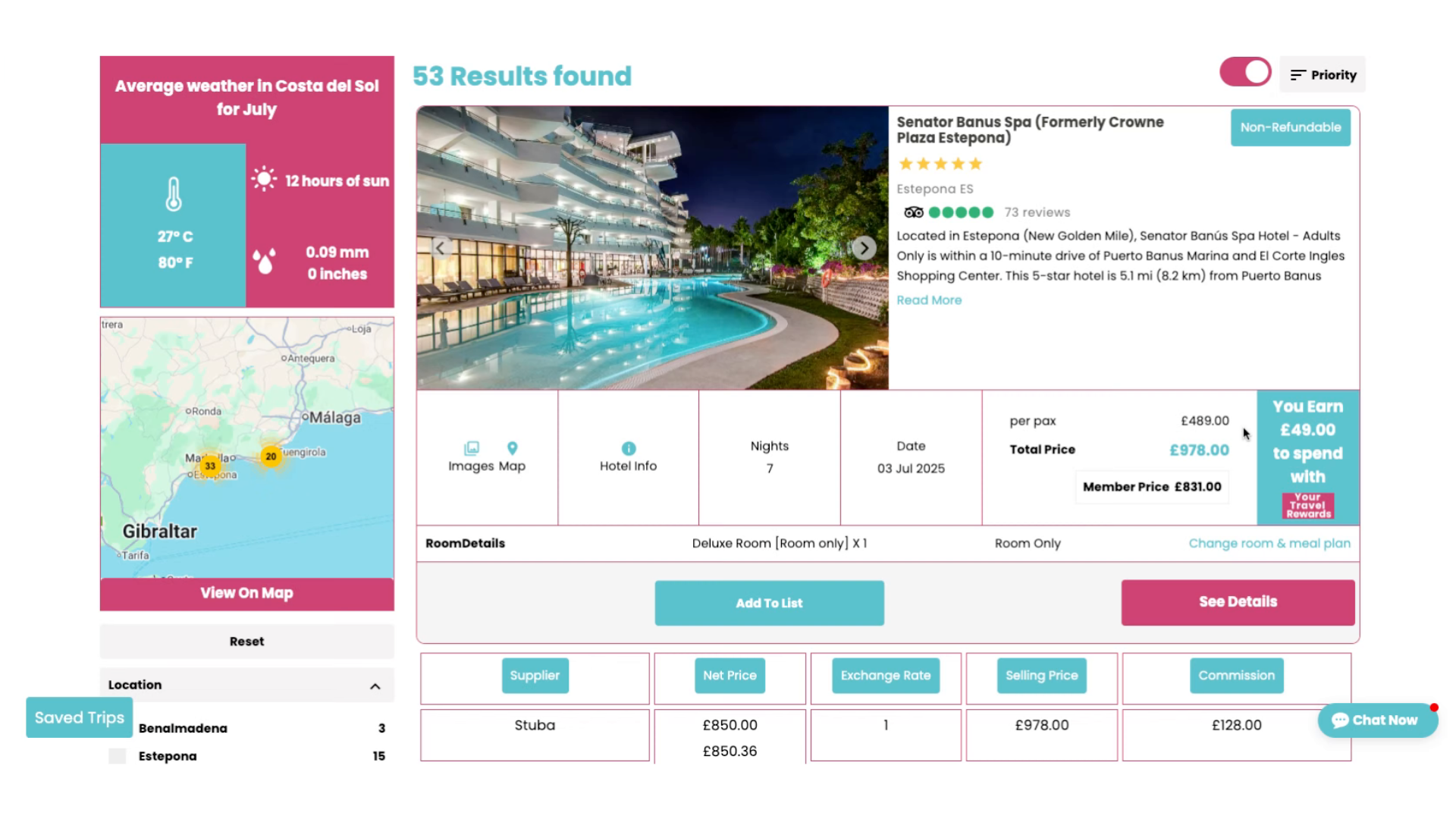
15. Click here to add to our list
Click here to add to our list
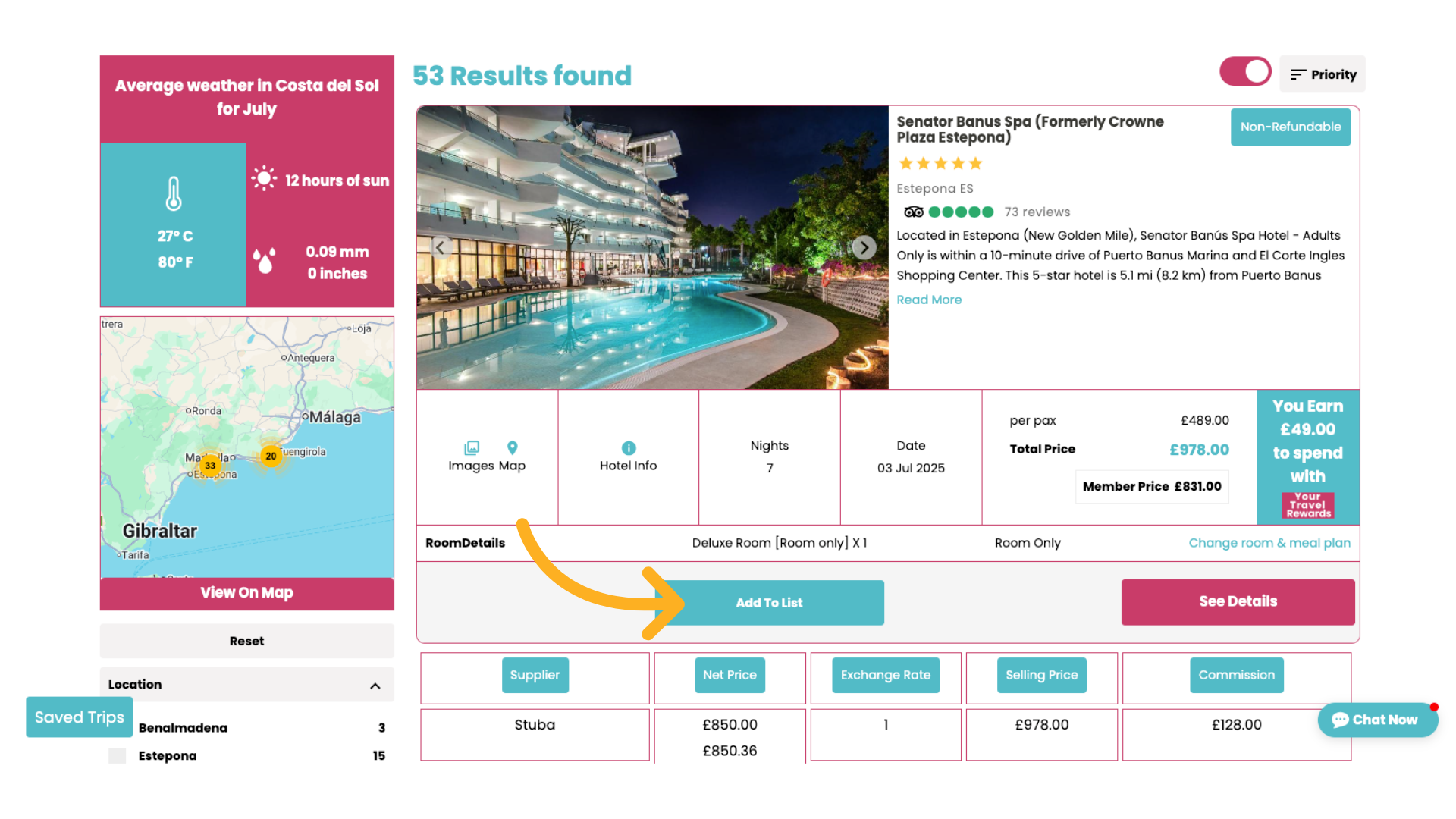
16. Continue adding as many as you want
Continue adding as many as you want
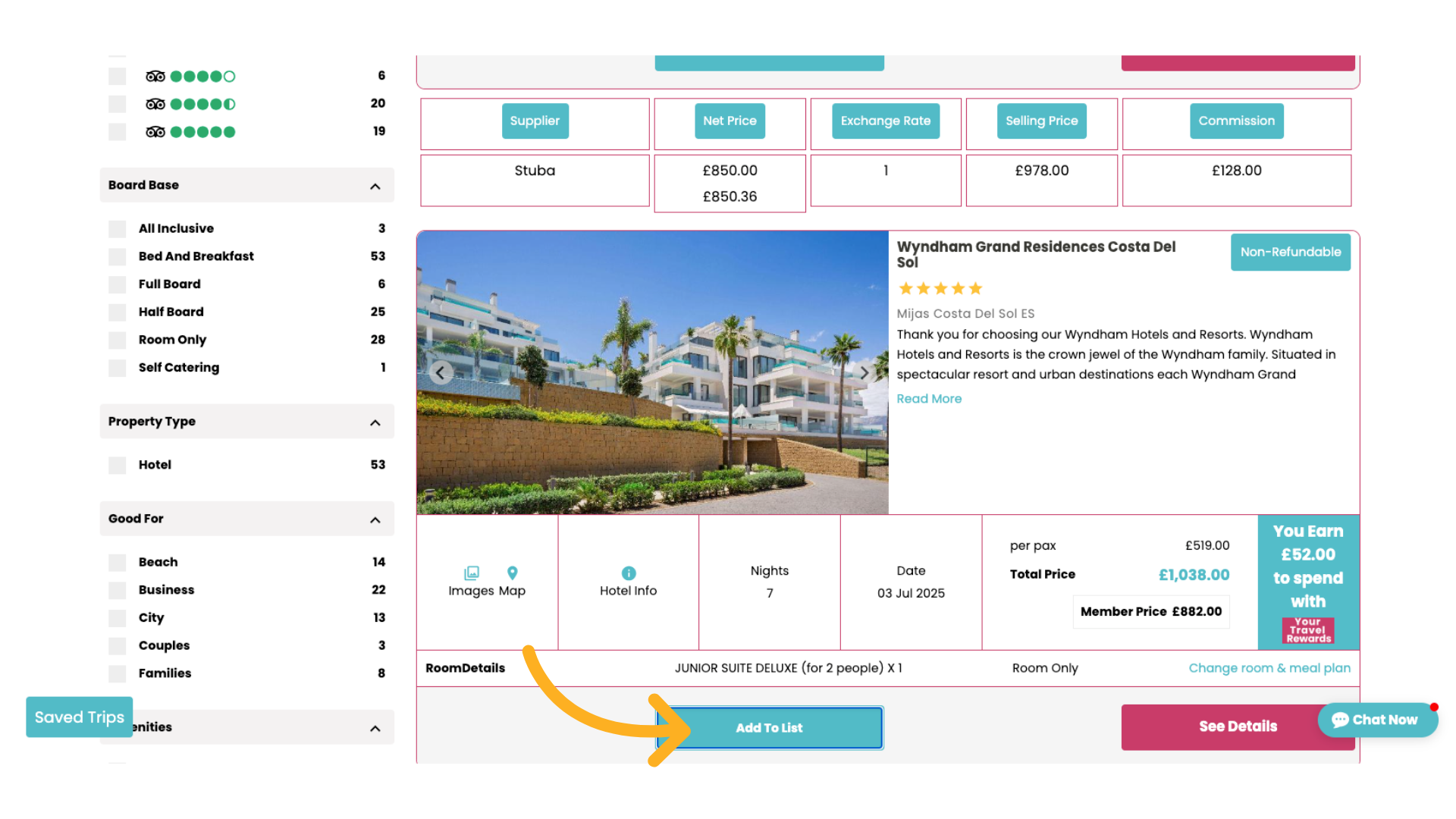
17. Add to List
Press the designated button.
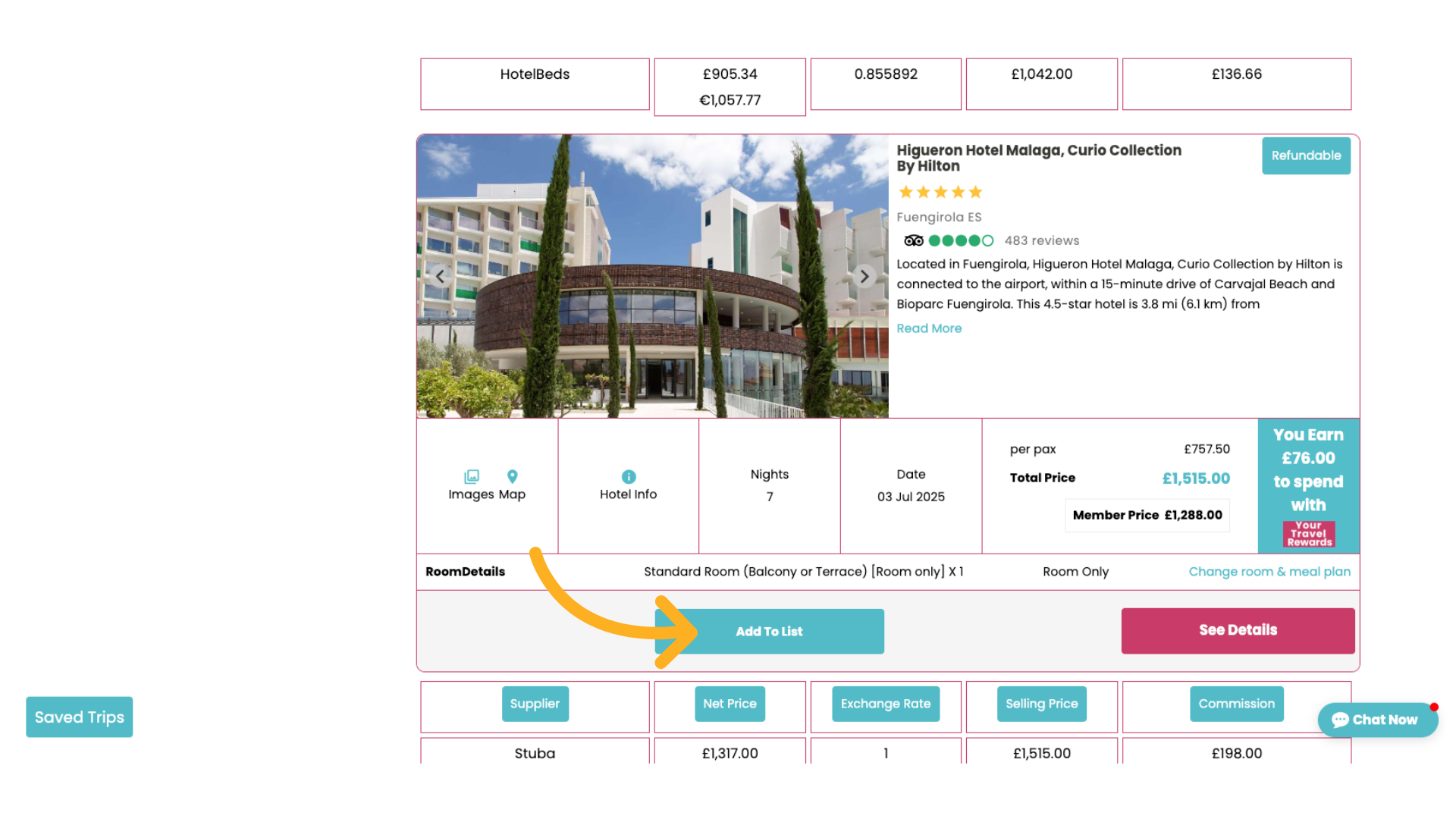
18. Add to List
Click on the highlighted element.
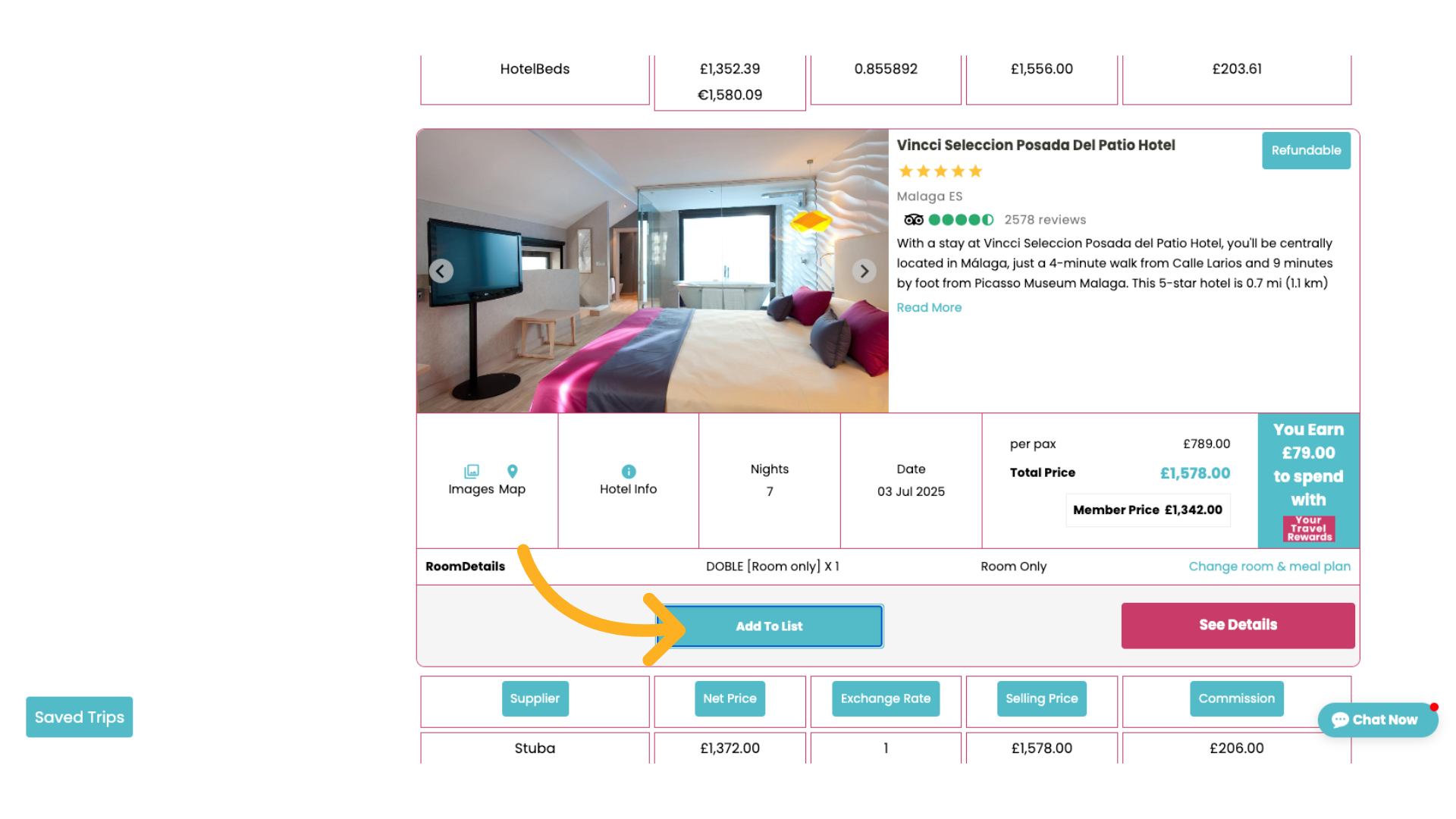
19. Add to List
Choose the provided link.
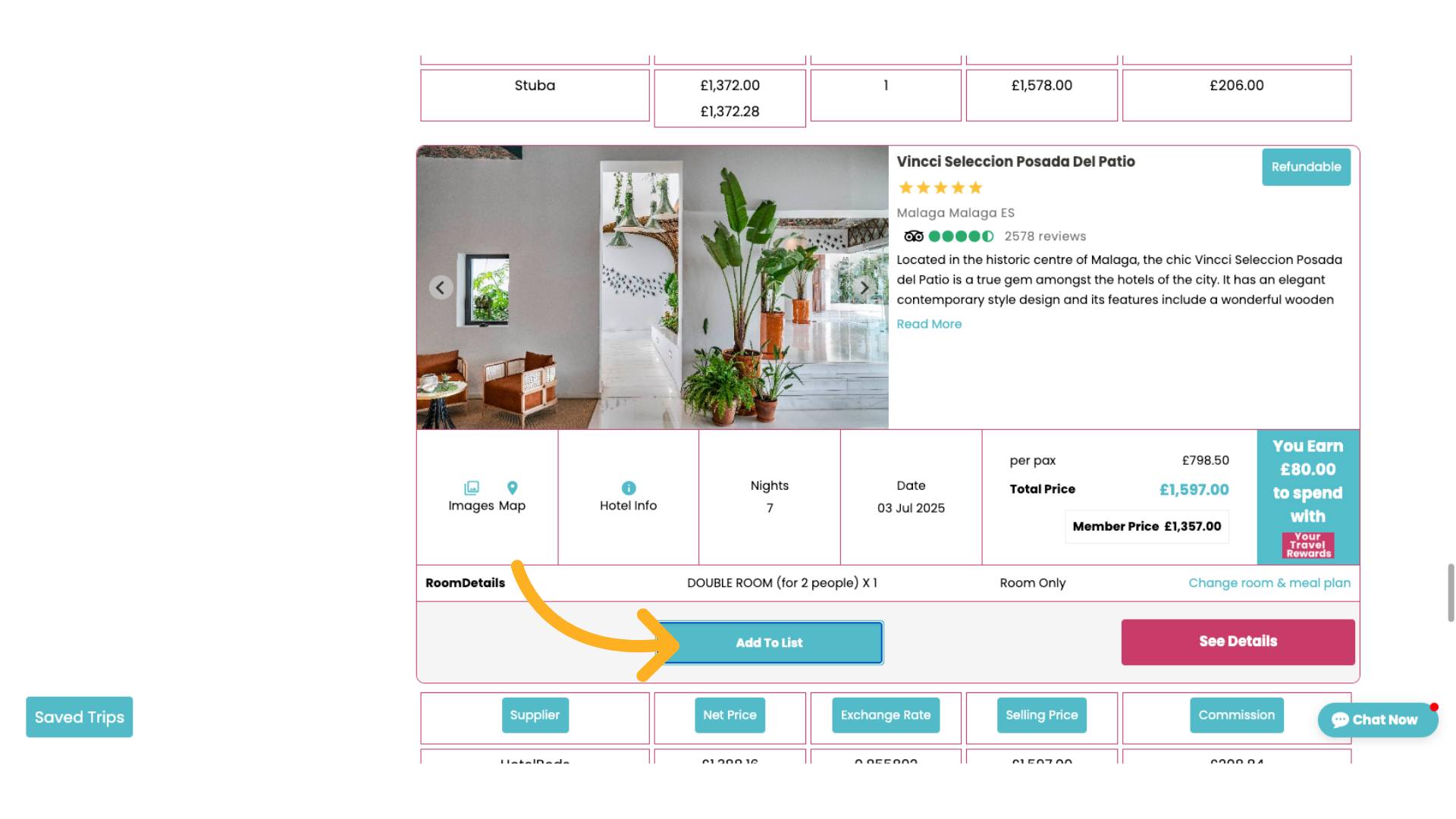
20. Now access Saved Trips to see all that you have added to your List
Now access Saved Trips to see all that you have added to your List
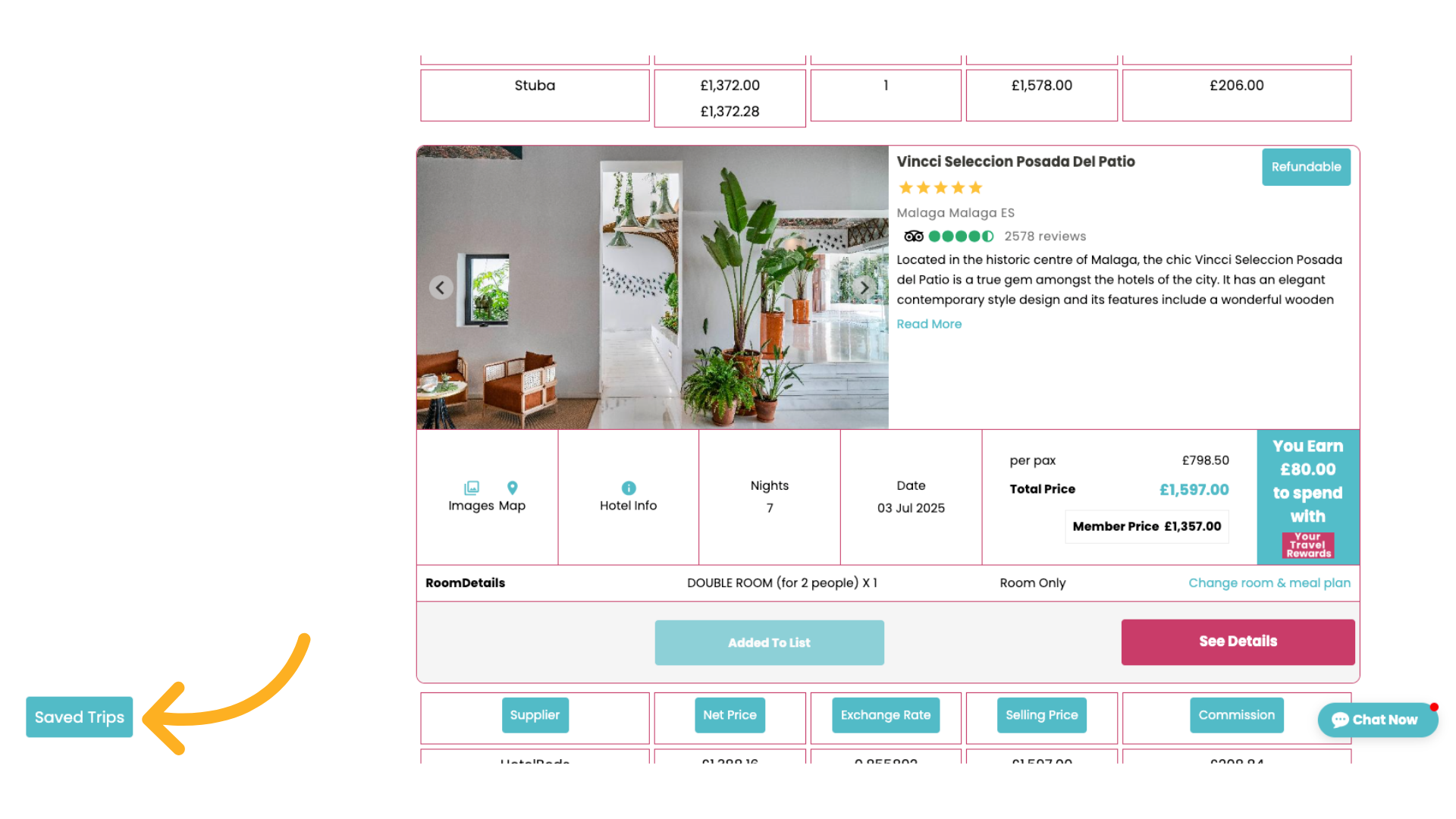
21. You can Edit the price if you wish by clicking here
By clicking here you can Edit the price if you wish
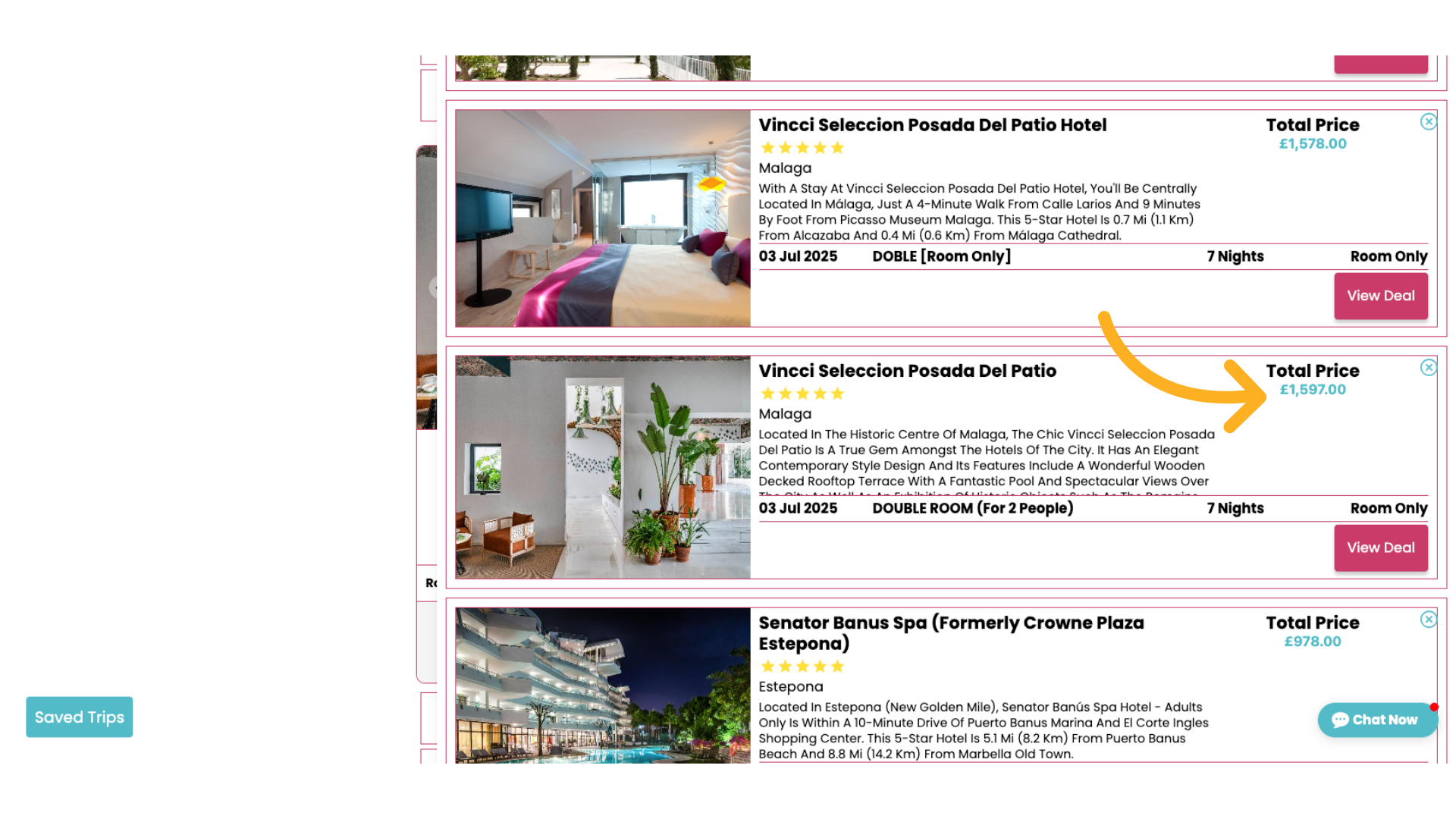
22. Click here to Save the list
Click here to Save the list
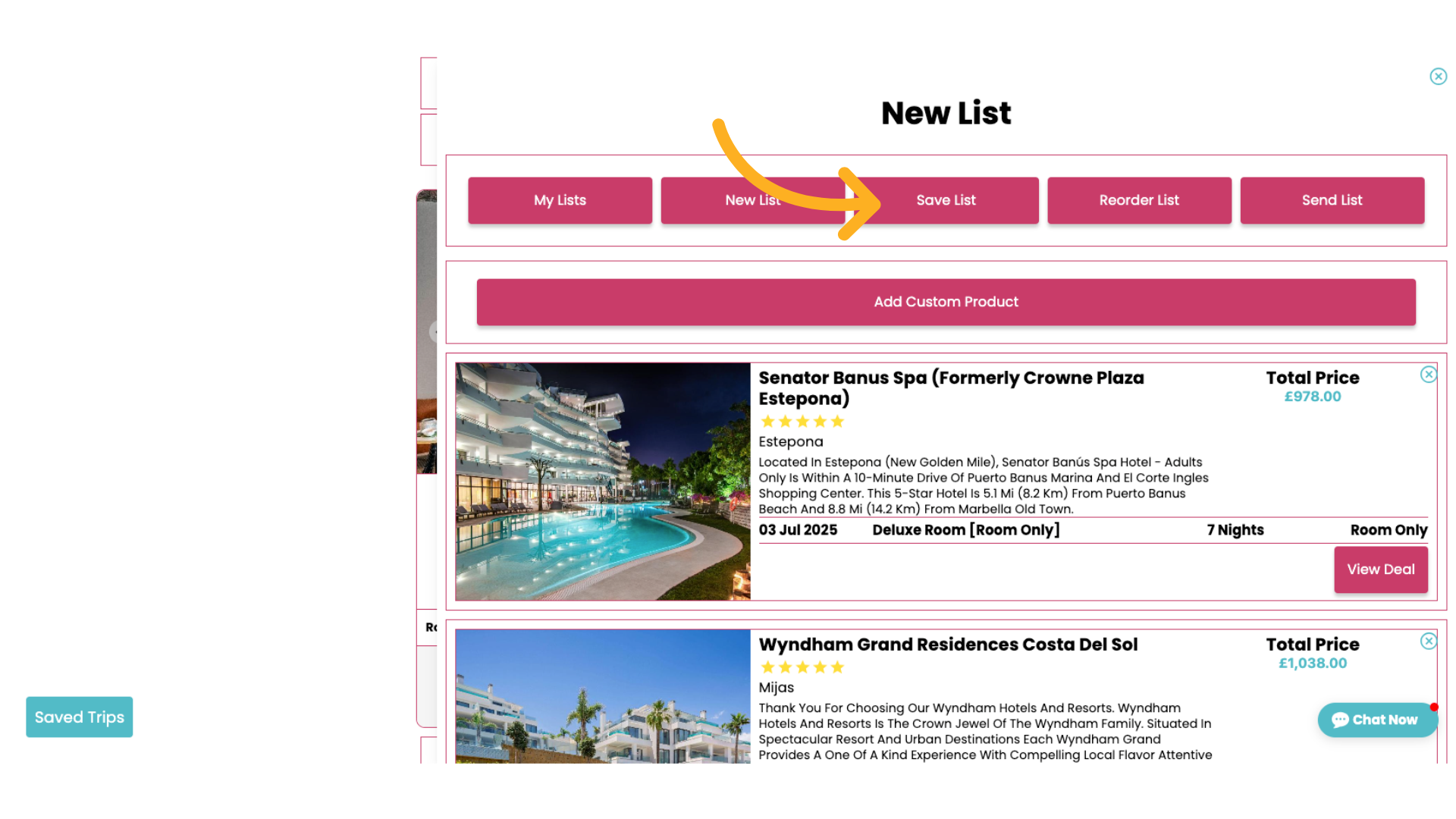
23. And here to give it a name
And here to give it a name
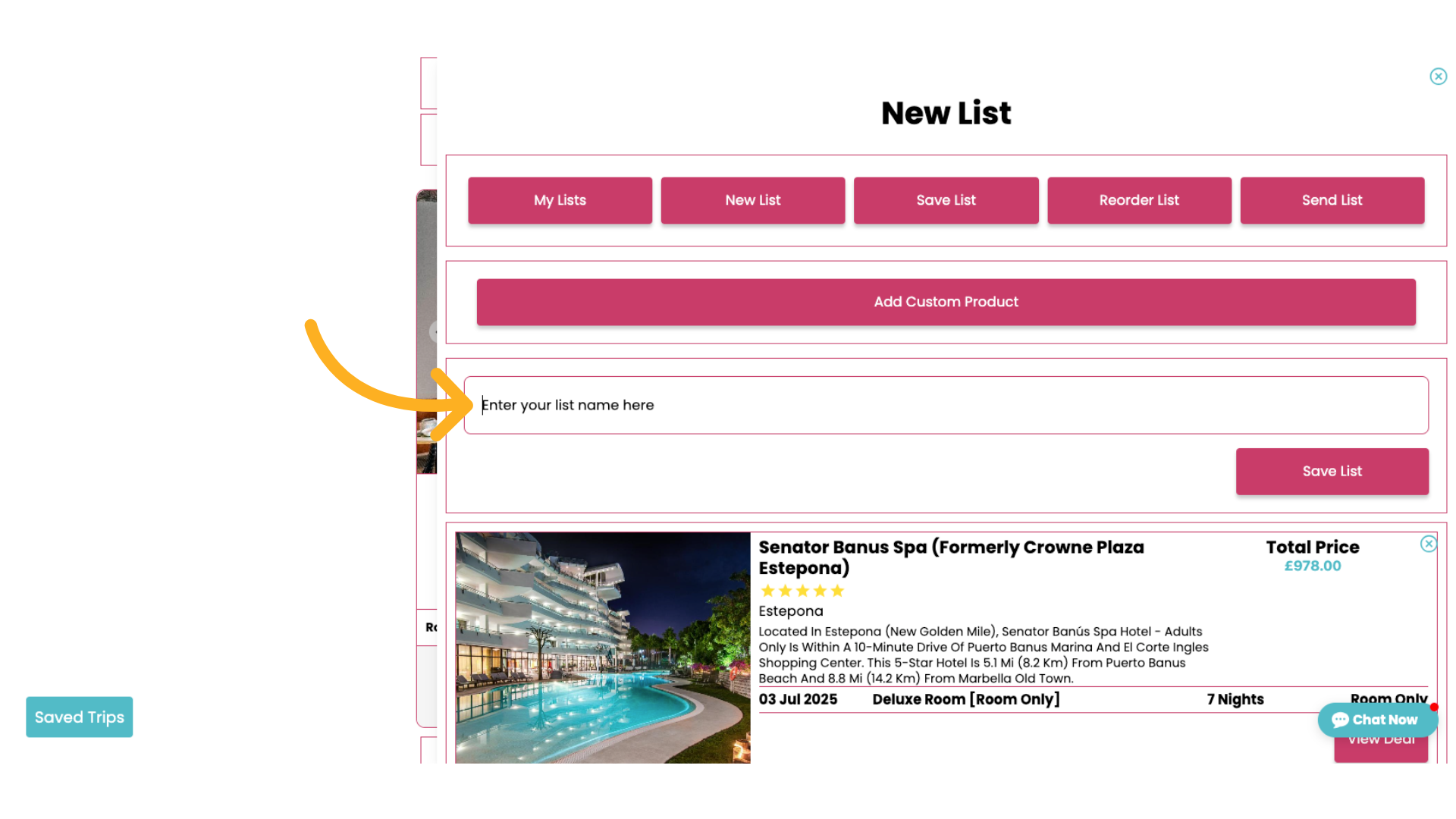
24. Fill in name
Select this option
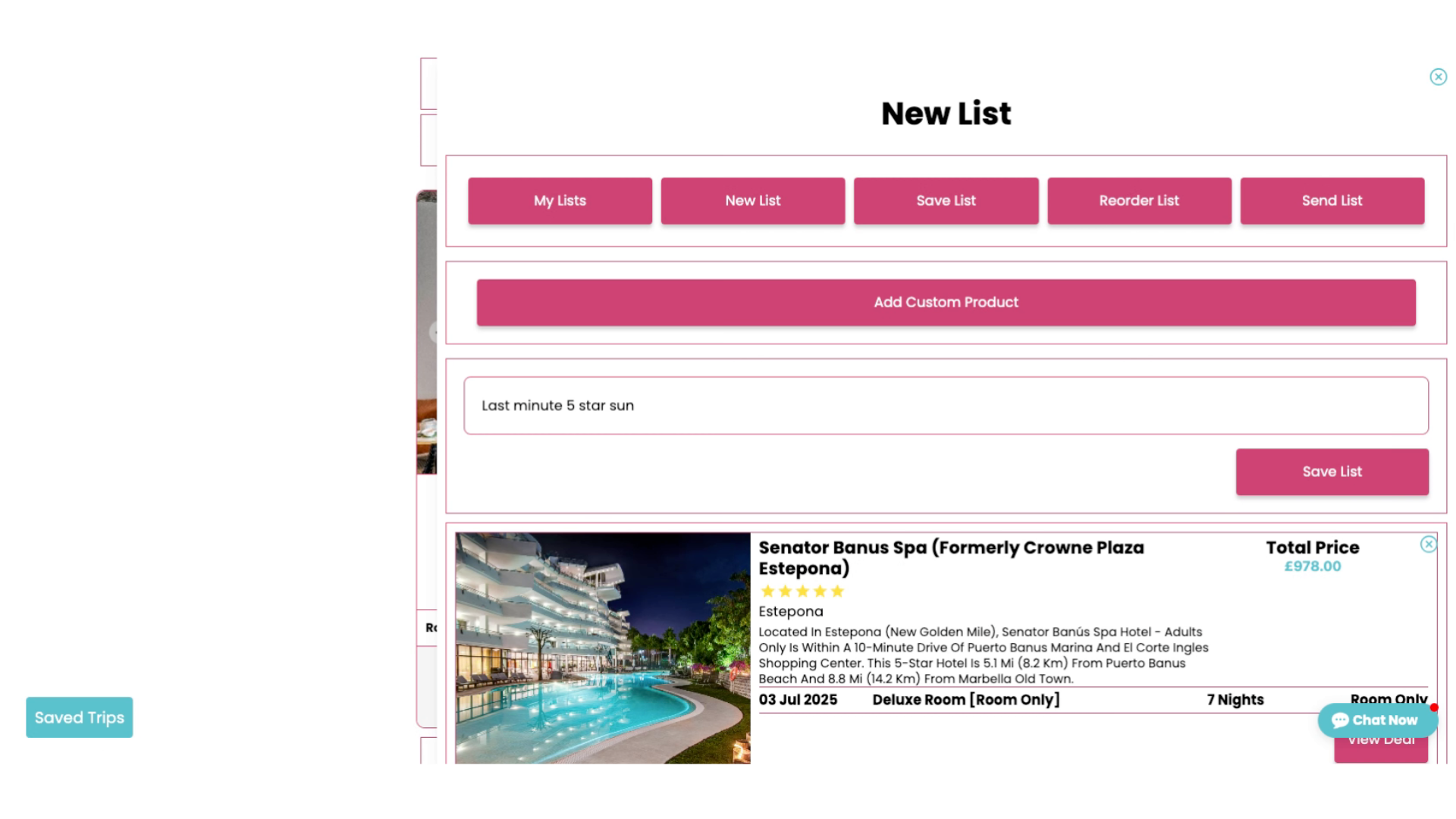
25. Click here to Save changes
Click here to Save changes
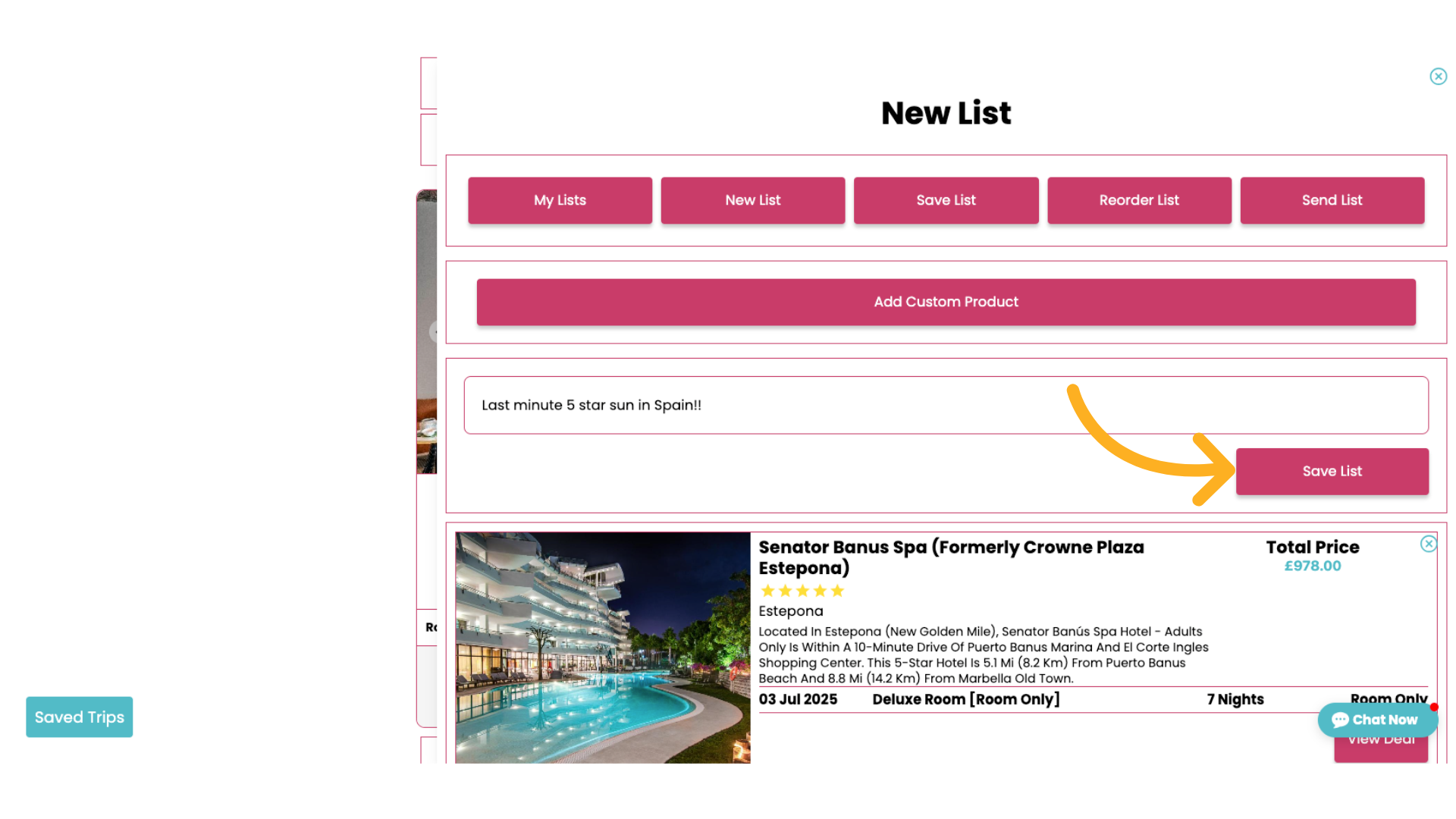
26. Now we are going to Send the List
Now we are going to Send the List to our customer
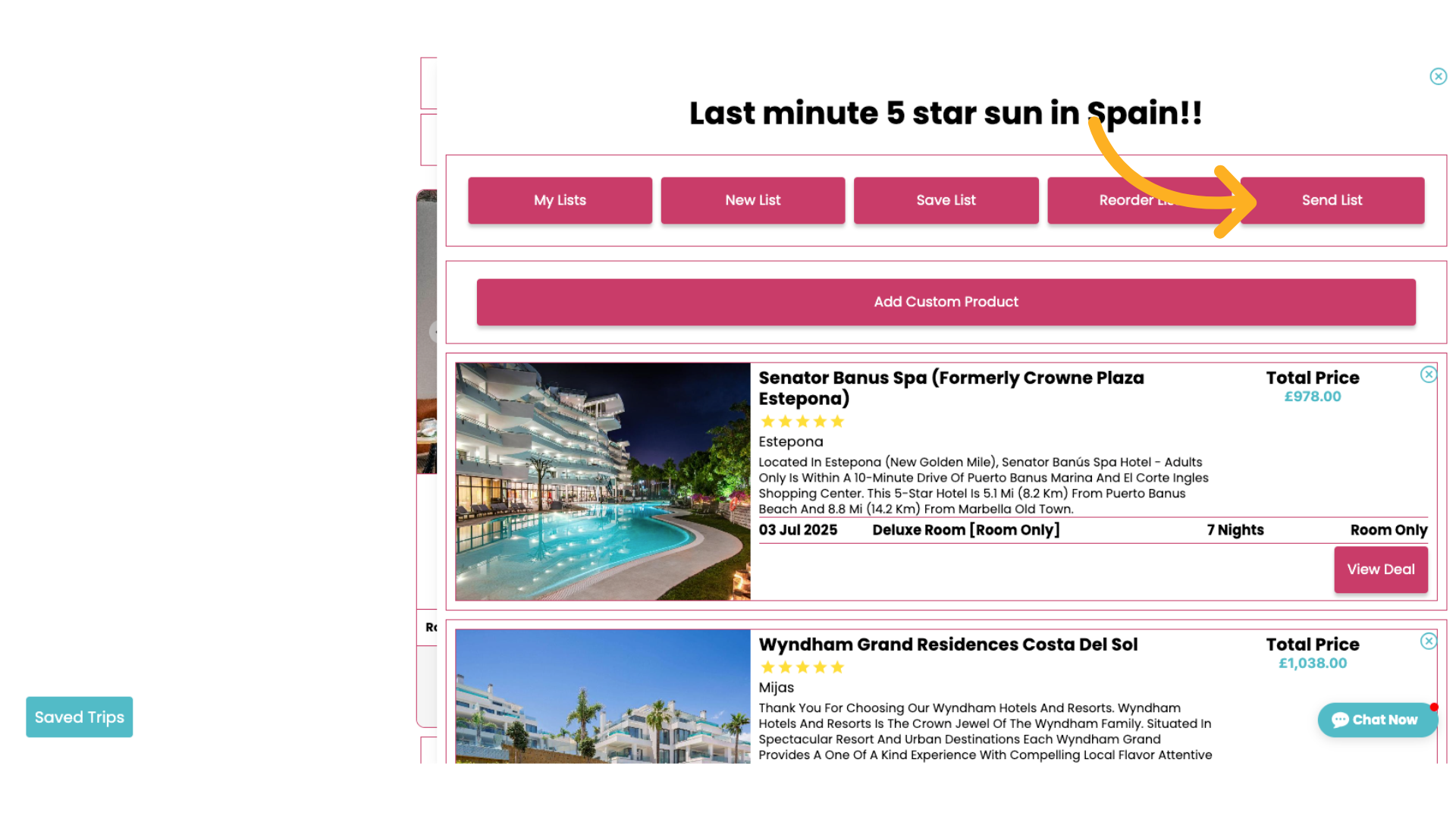
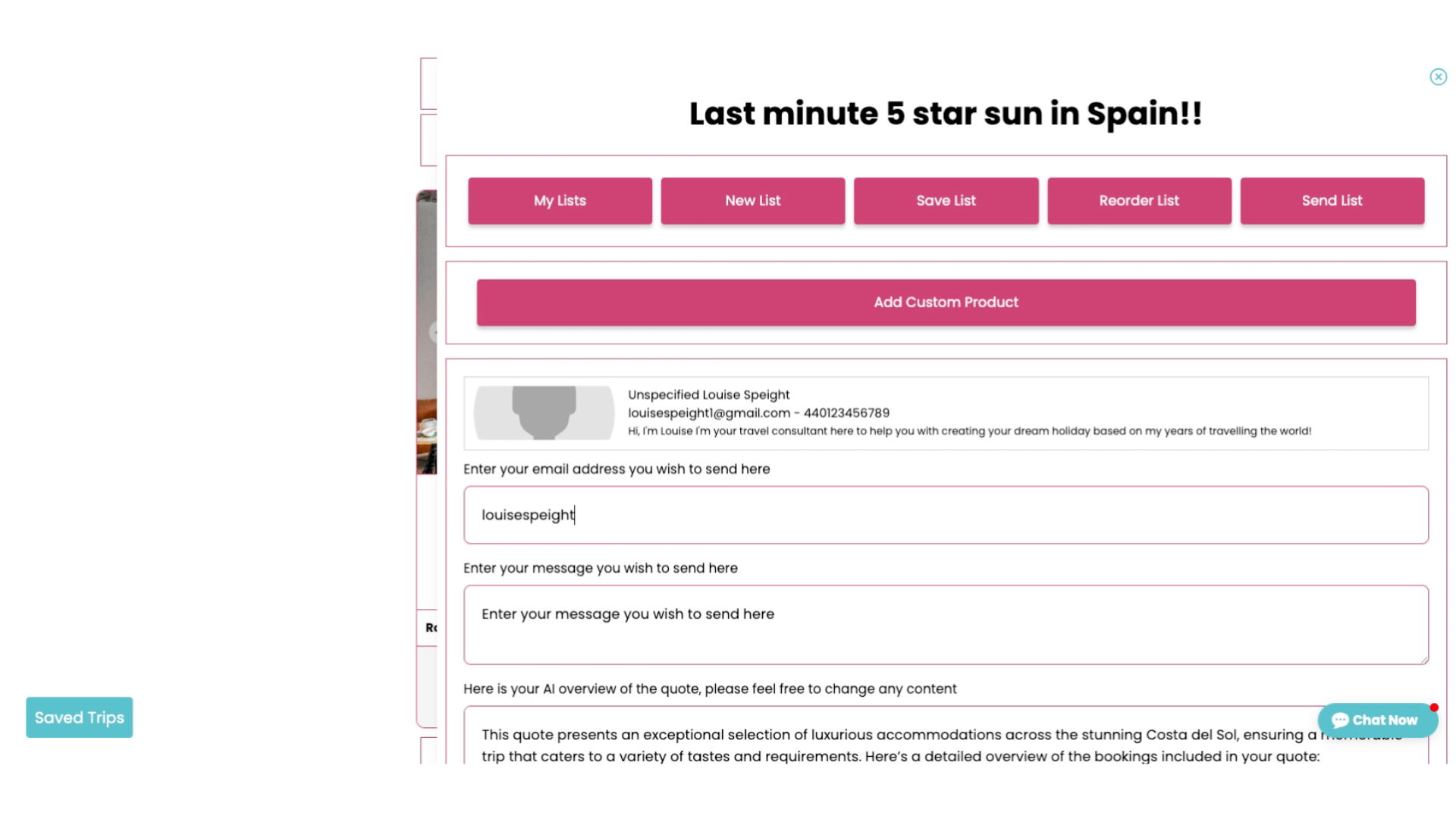
27. Enter their email address
Enter their email address
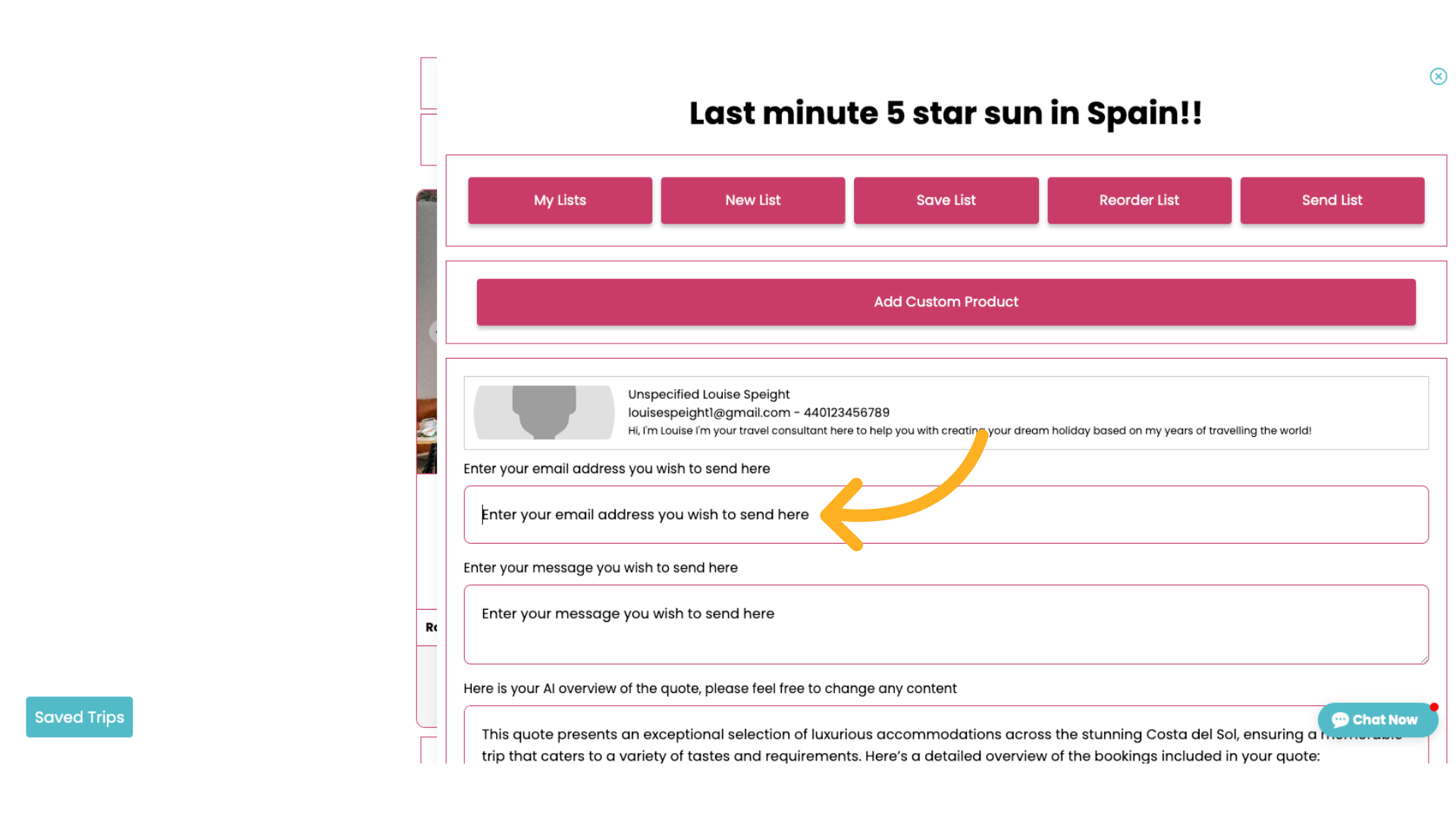
28. Fill in
Click the selected option
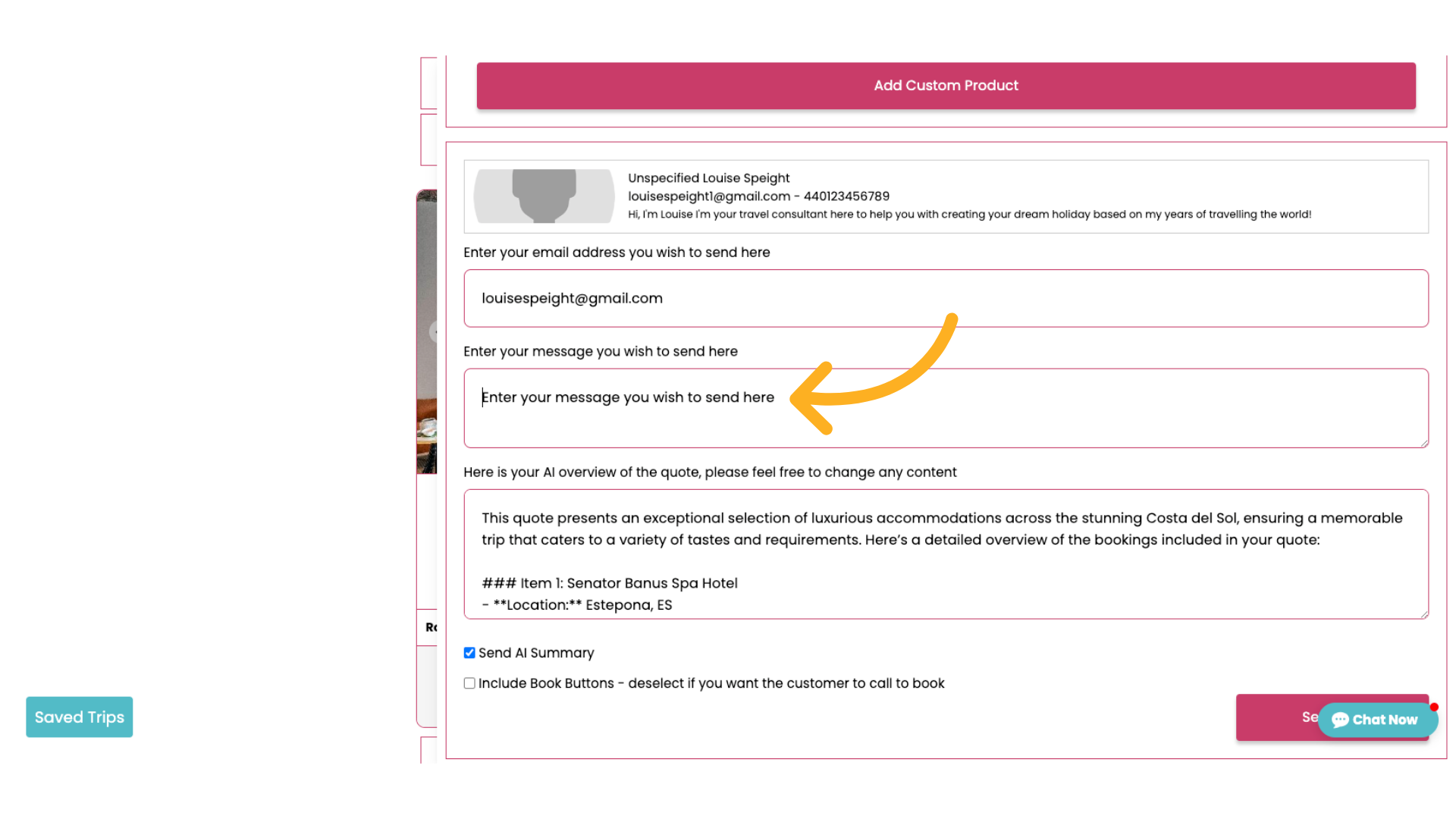
29. Type in your message
Type in your message
30. Fill in
Navigate to this section
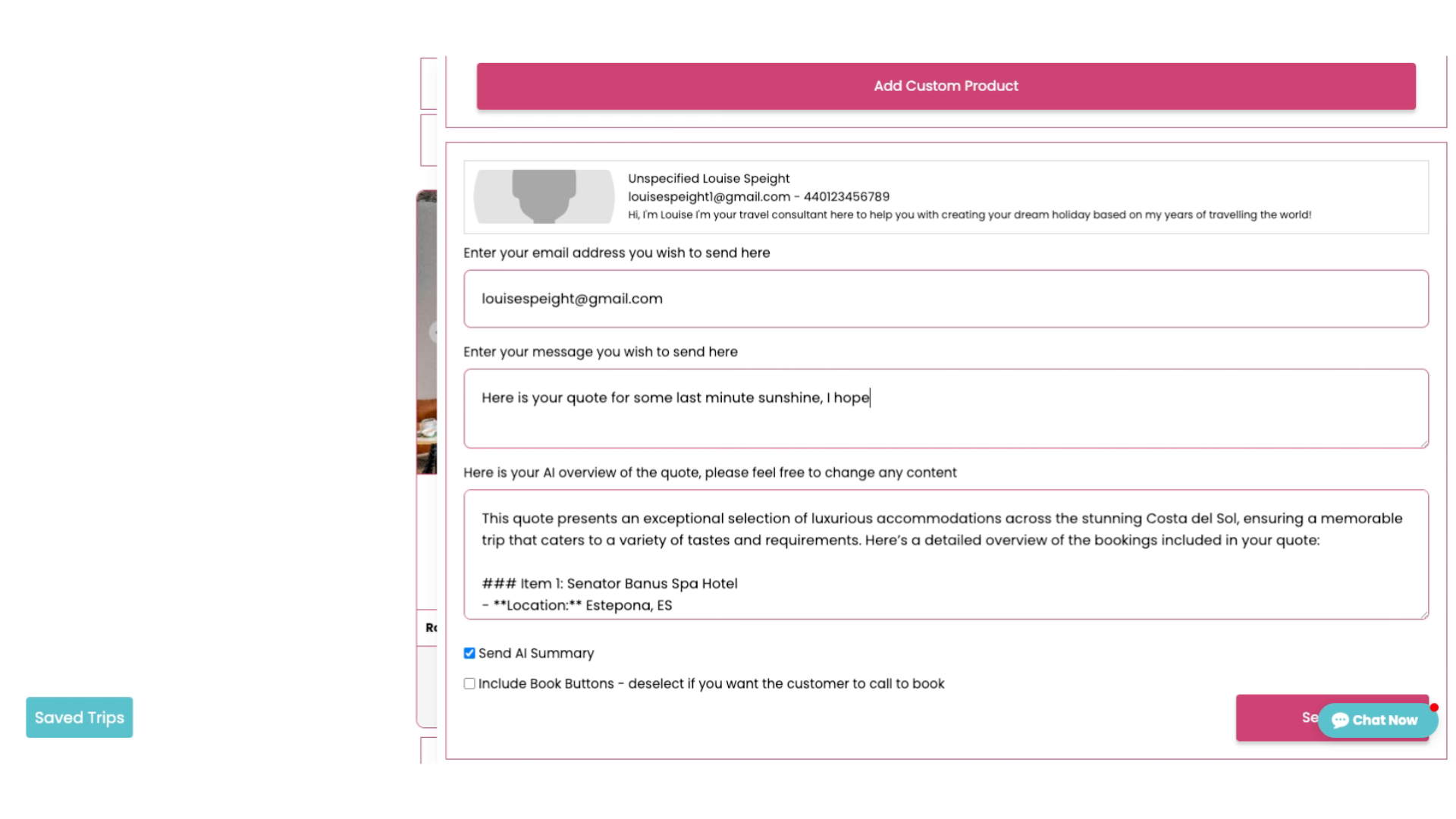
31. Once you have had a look at the Overview of your quote you can Send
The quote will include AI generated information on locations, hotels etc that you have selected.

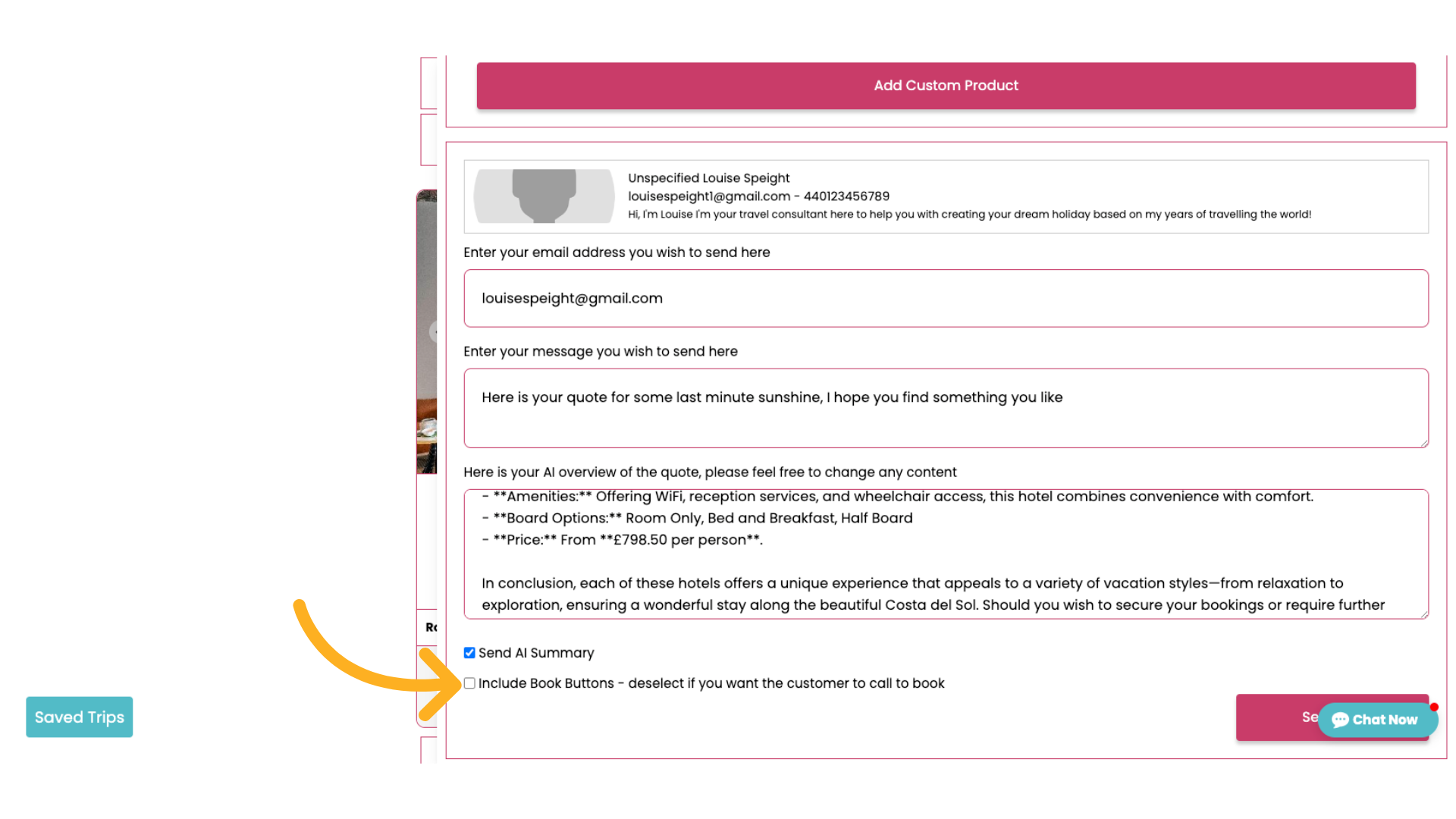
32. If you check this box then the customer will be able to book via the email
If you check this box then the customer will be able to make a booking direct via links in the email or PDF, rather than through your website
33. Once you have had a look at the Overview of your quote you can Send
Once you have had a look at the Overview of your quote you can Send it to your customer

34. This is how your quote will arrive in your customers Inbox
This is how your quote will arrive in your customers Inbox
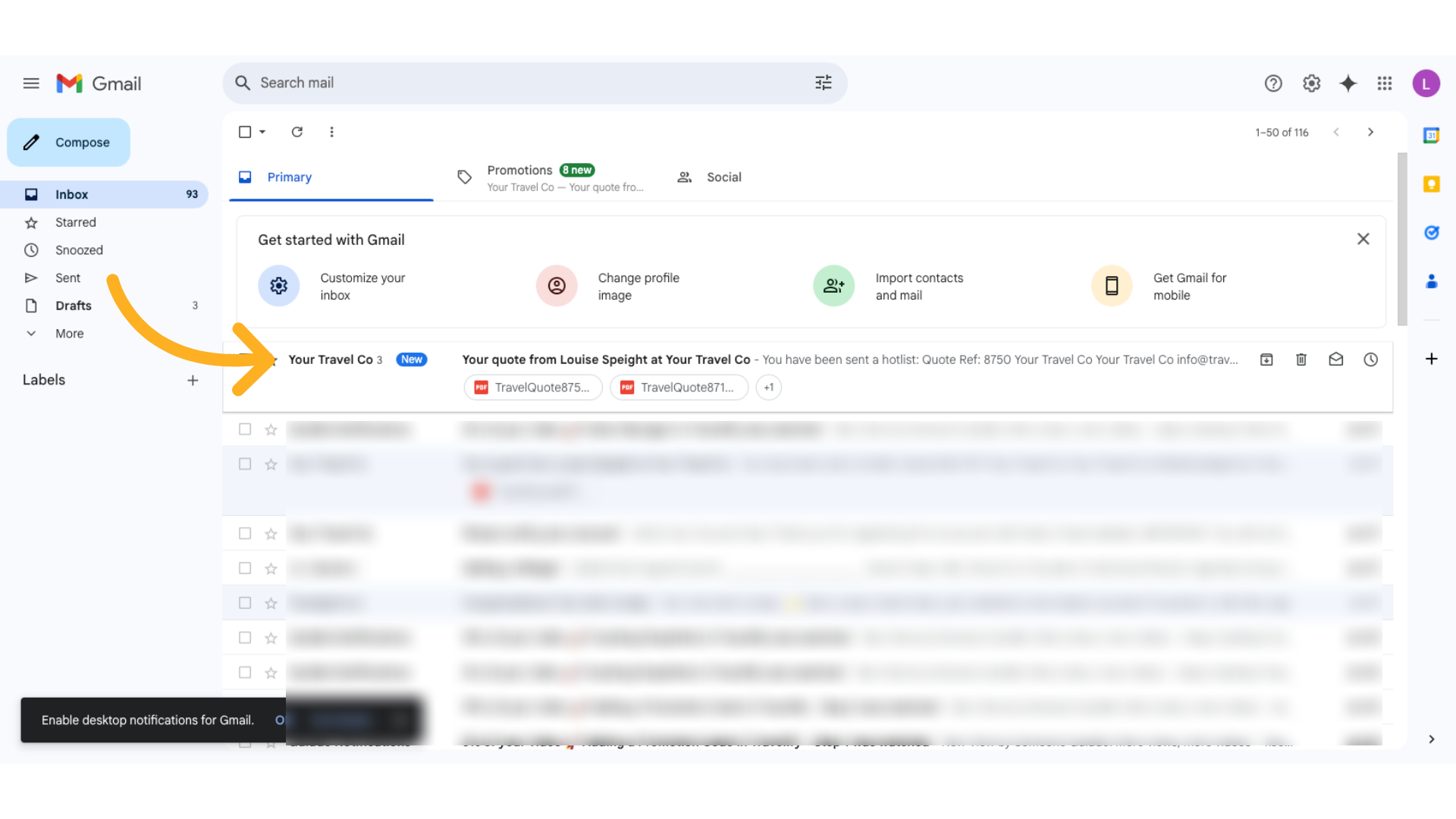
35. Here is the contents of the email
Here is the contents of the email
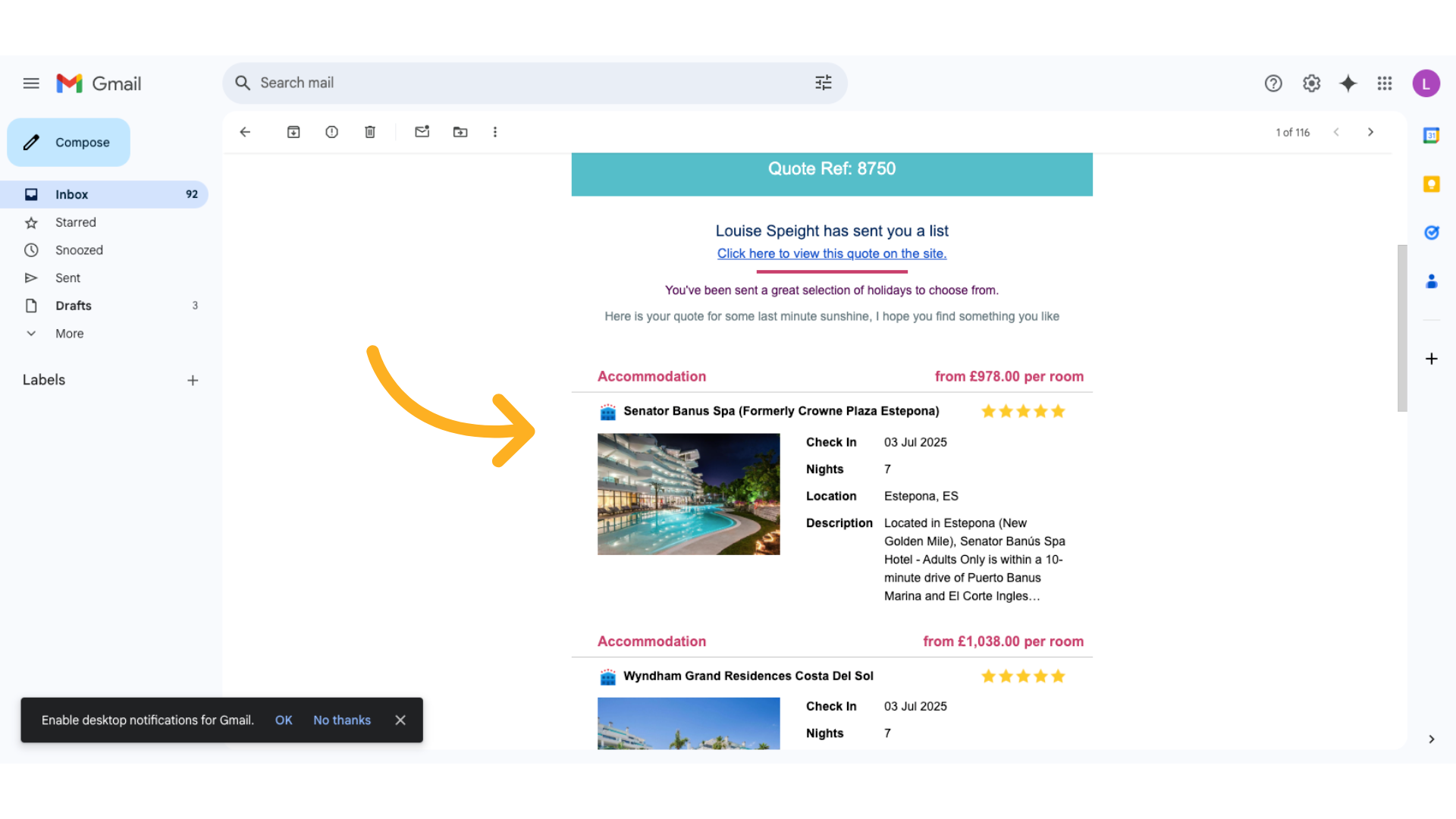
36. Email content
From downloading accommodation details to accessing specific documents, follow these steps to streamline your workflow in Gmail.
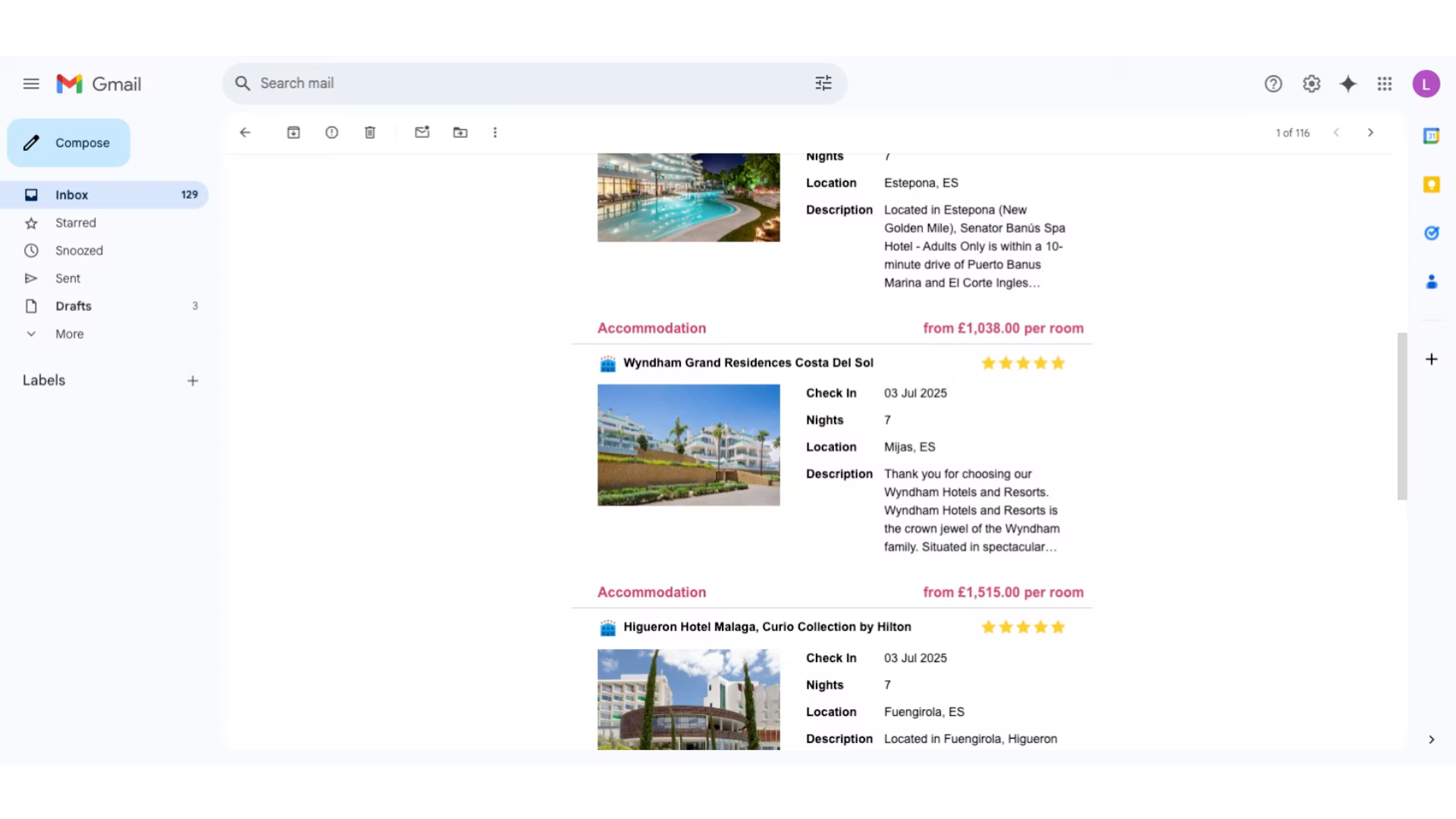
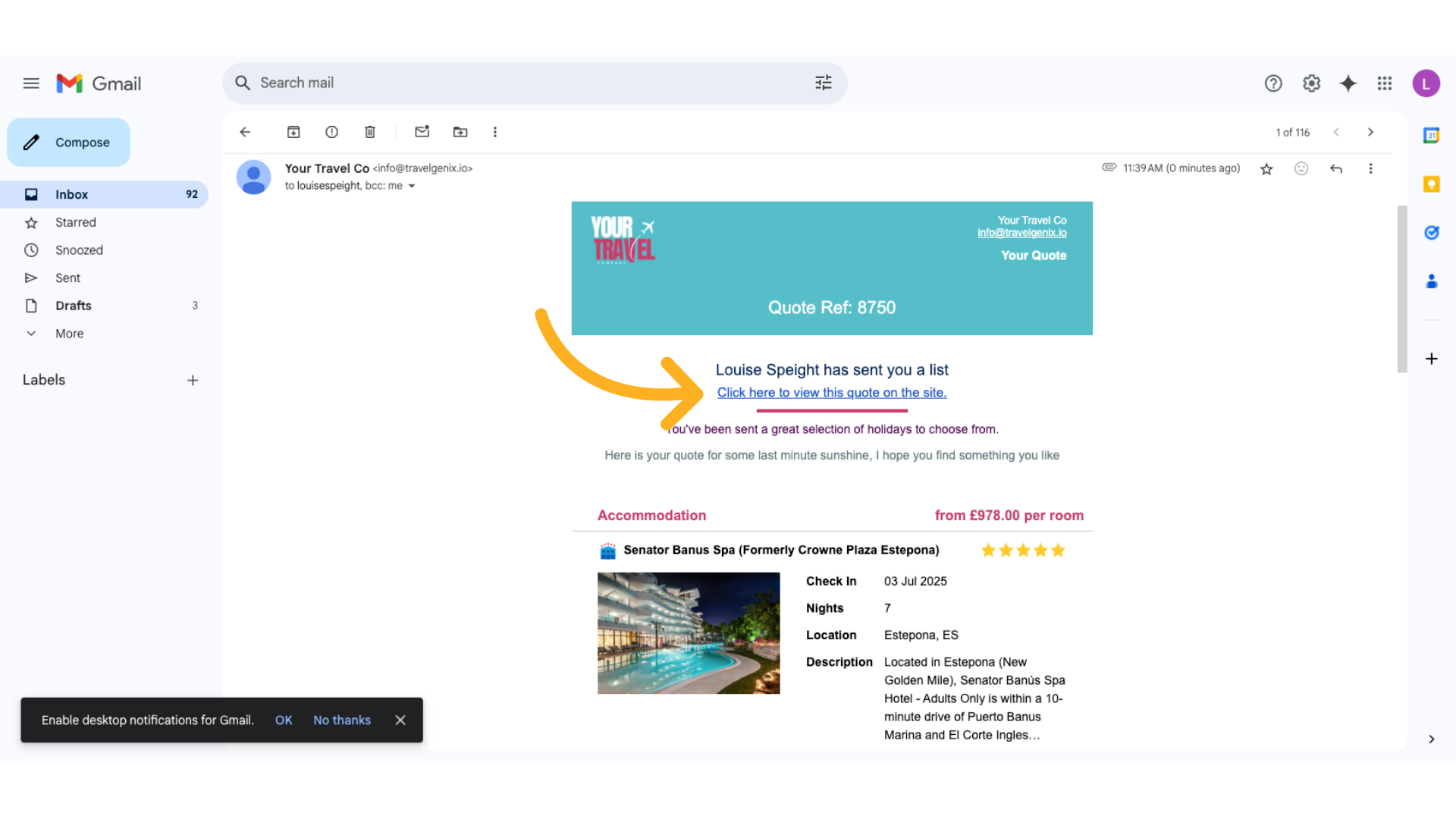
37. Click "Click here to view this quote on the site."
They can click on the link to view the quote on the website where they can book it direct
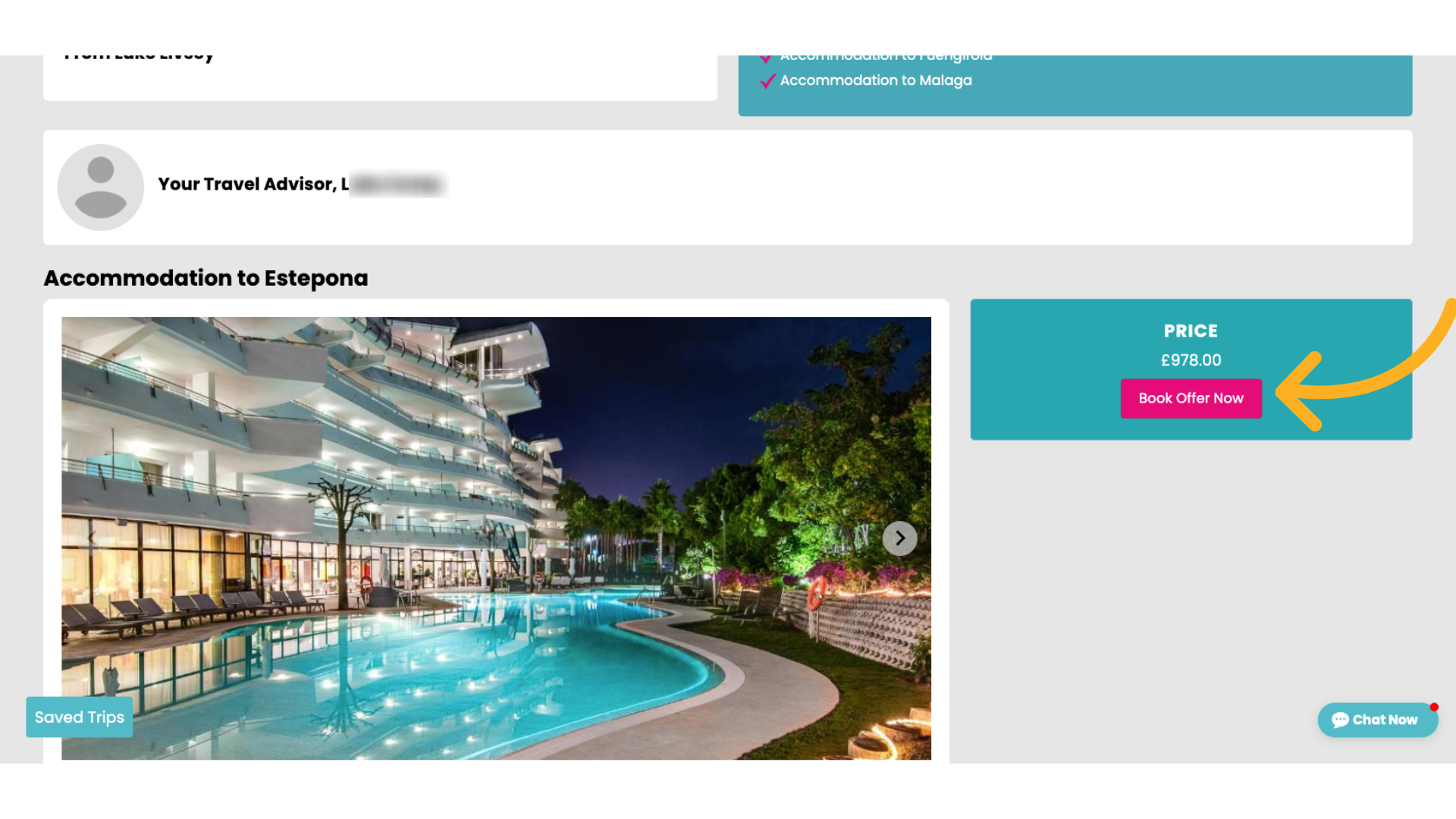
38. Customer can view quote on your website
Your Customer can view, and book, using the quote on your website via the link in their email
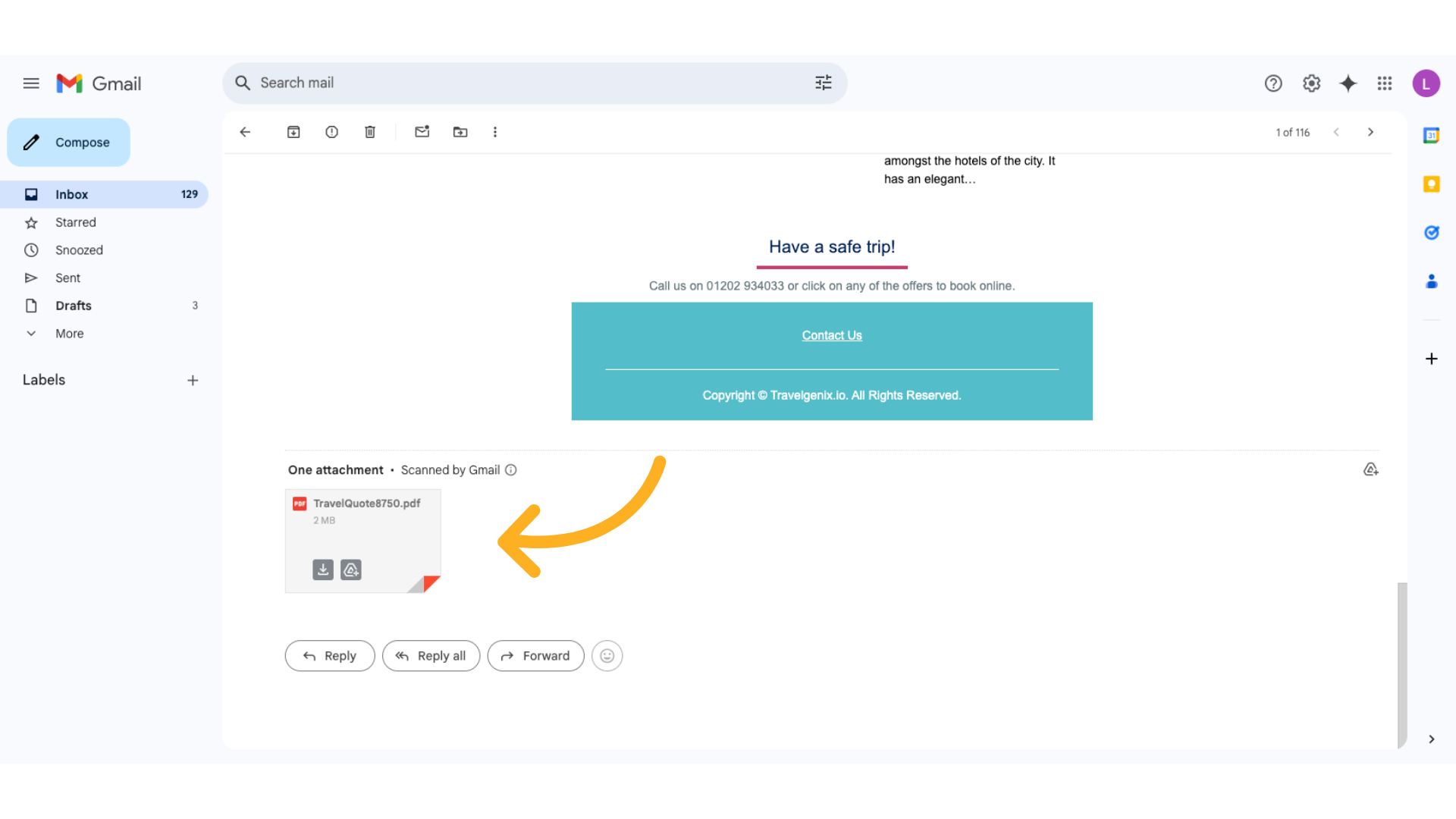
39. The email also includes a PDF of the quote
The email also includes a PDF of the quot
40. The PDF is a beautifully branded and curated version of your quote
The PDF is a beautifully branded and curated version of your quote
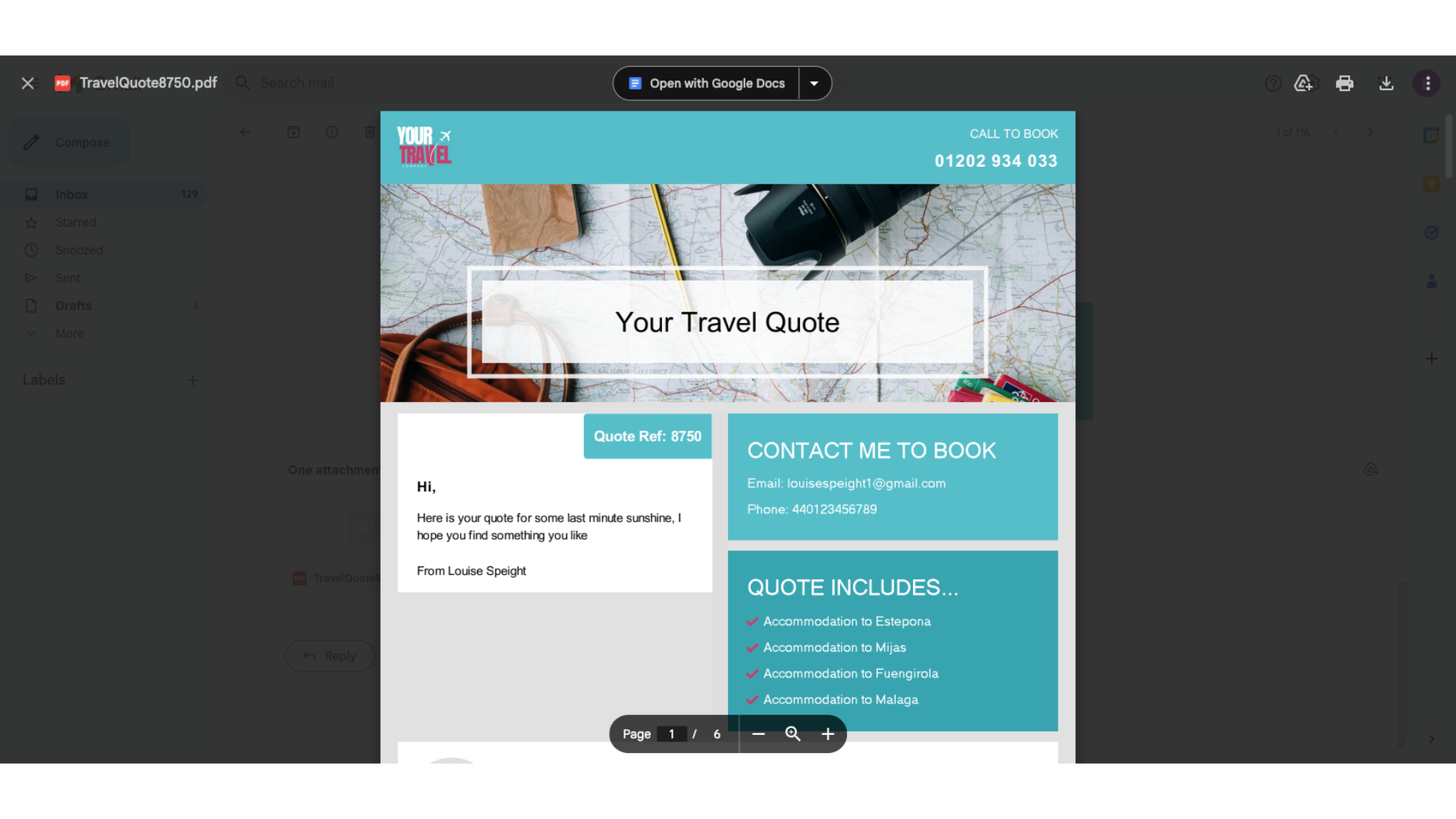
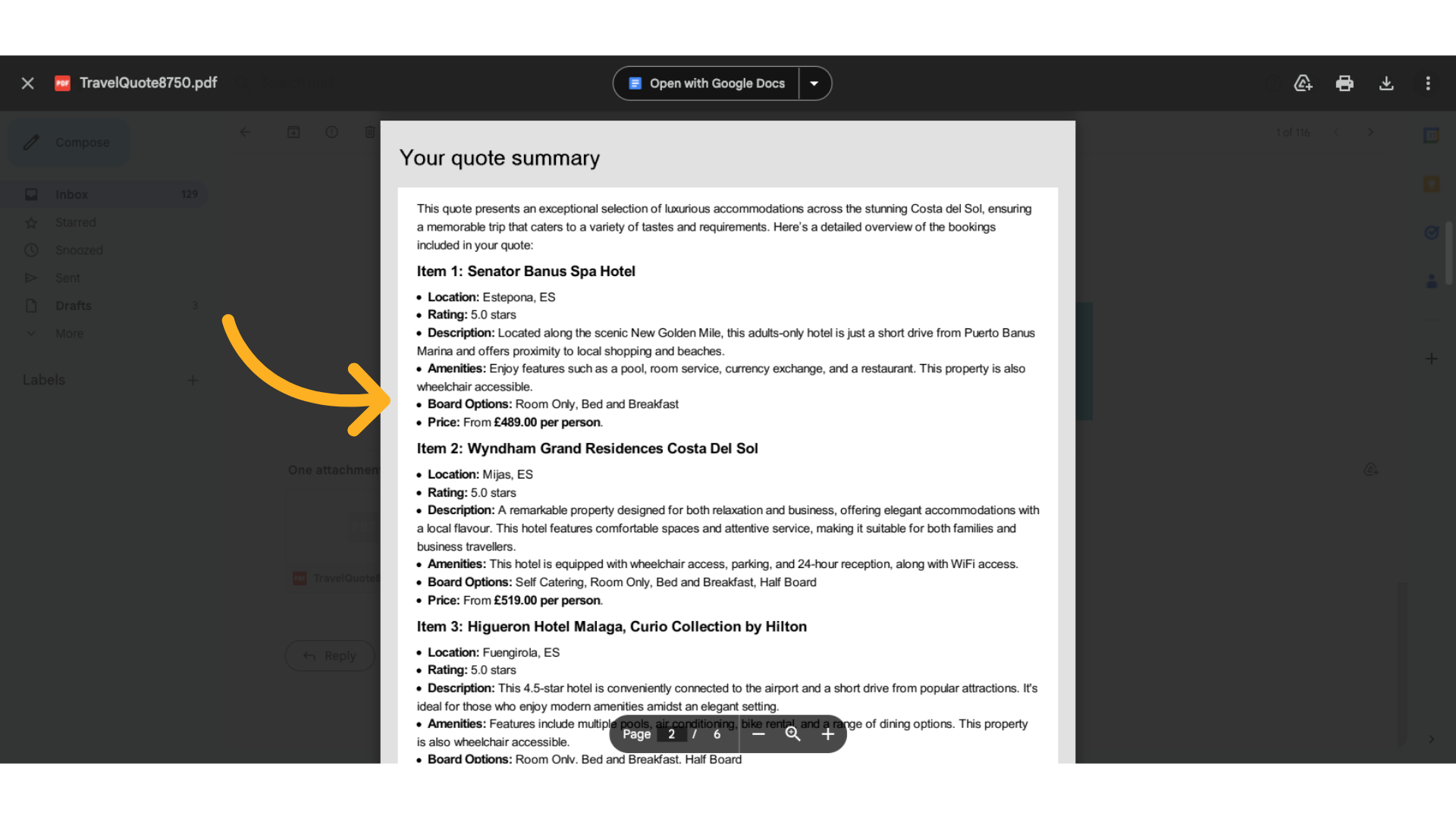
41. PDF contents
Follow the link provided.
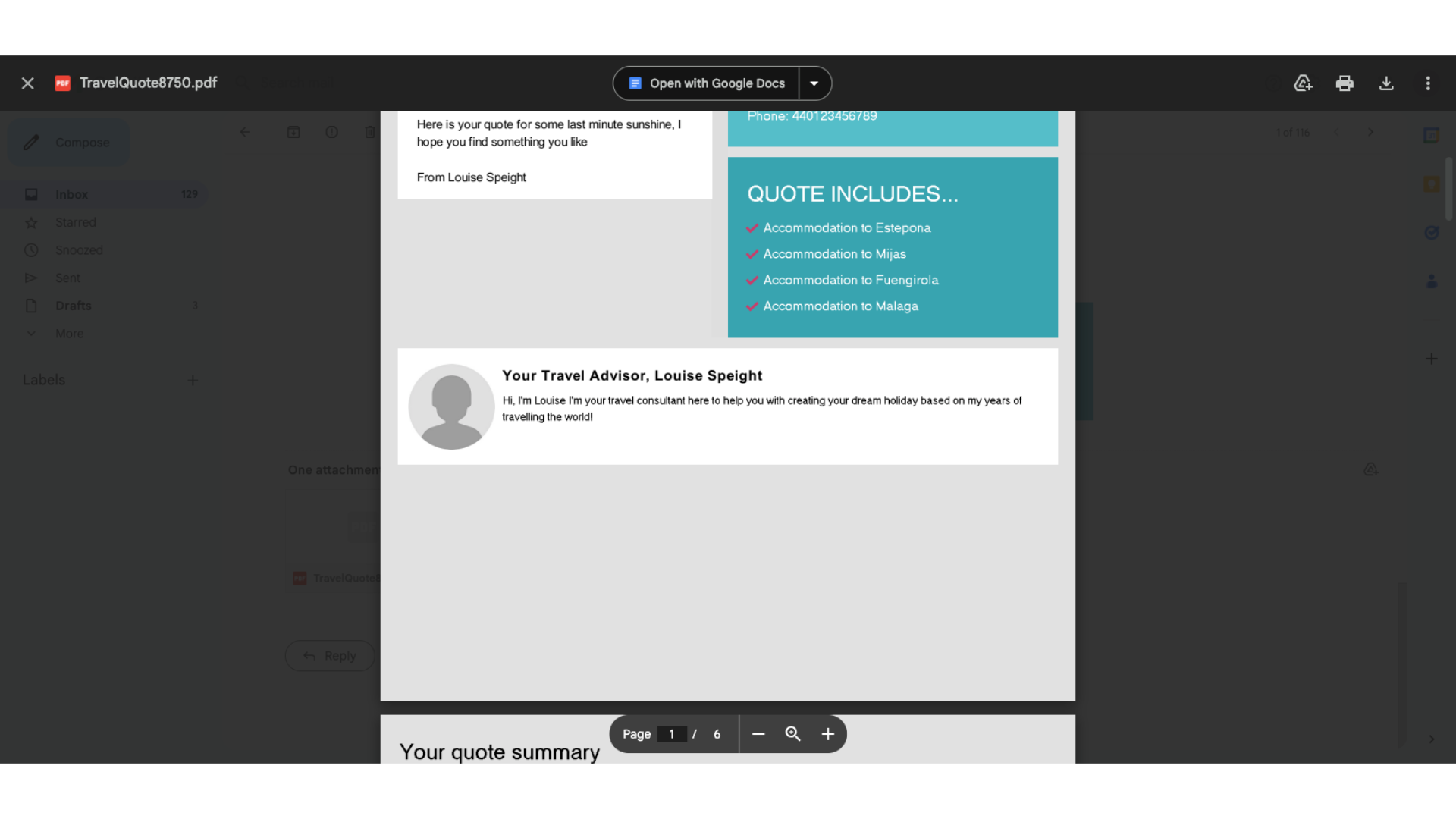
42. PDF contents
Follow the link provided.
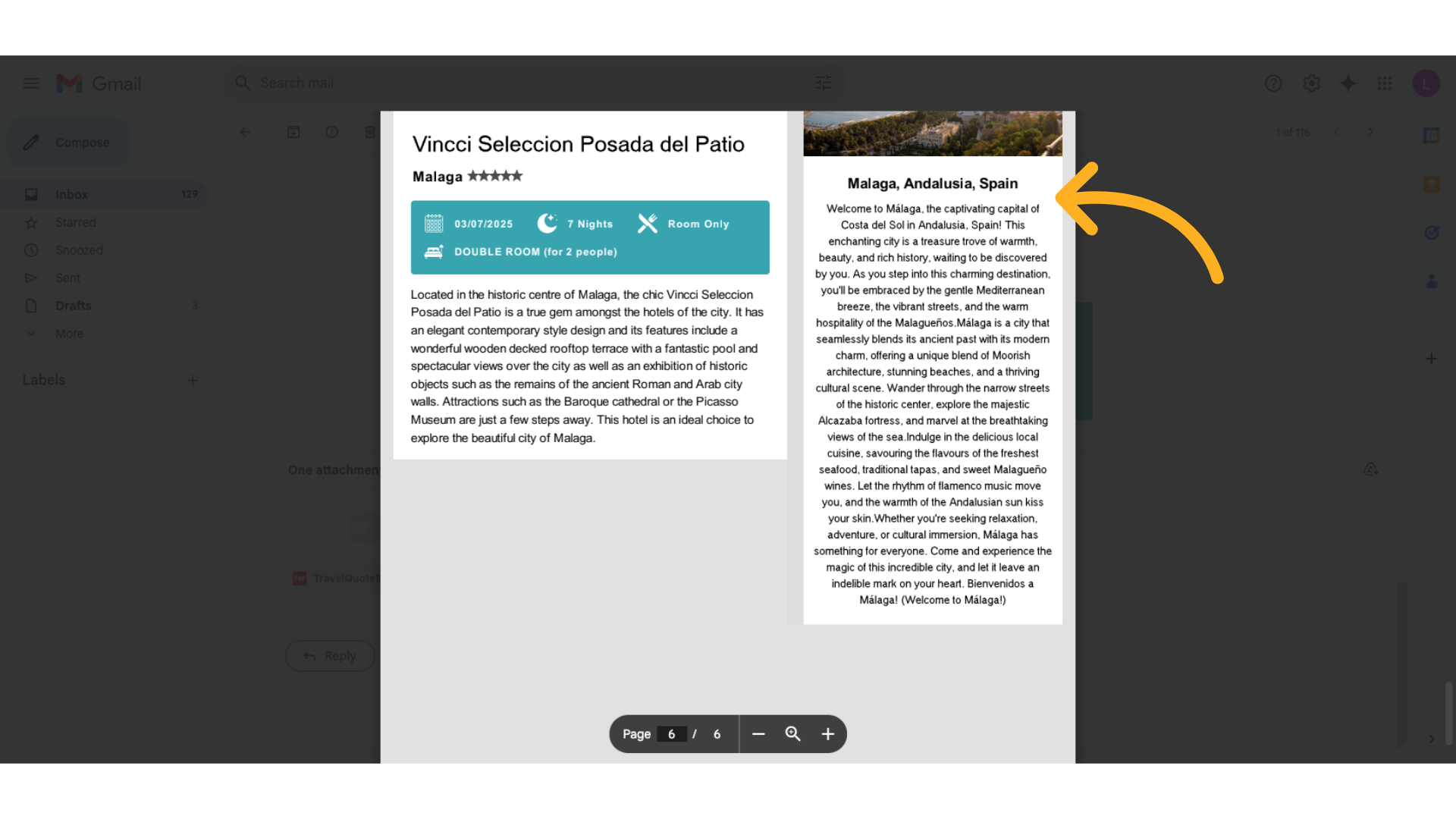
43. If there is a destination guide in our database this will also appear
If there is a destination guide in our database for the location, this will also appear
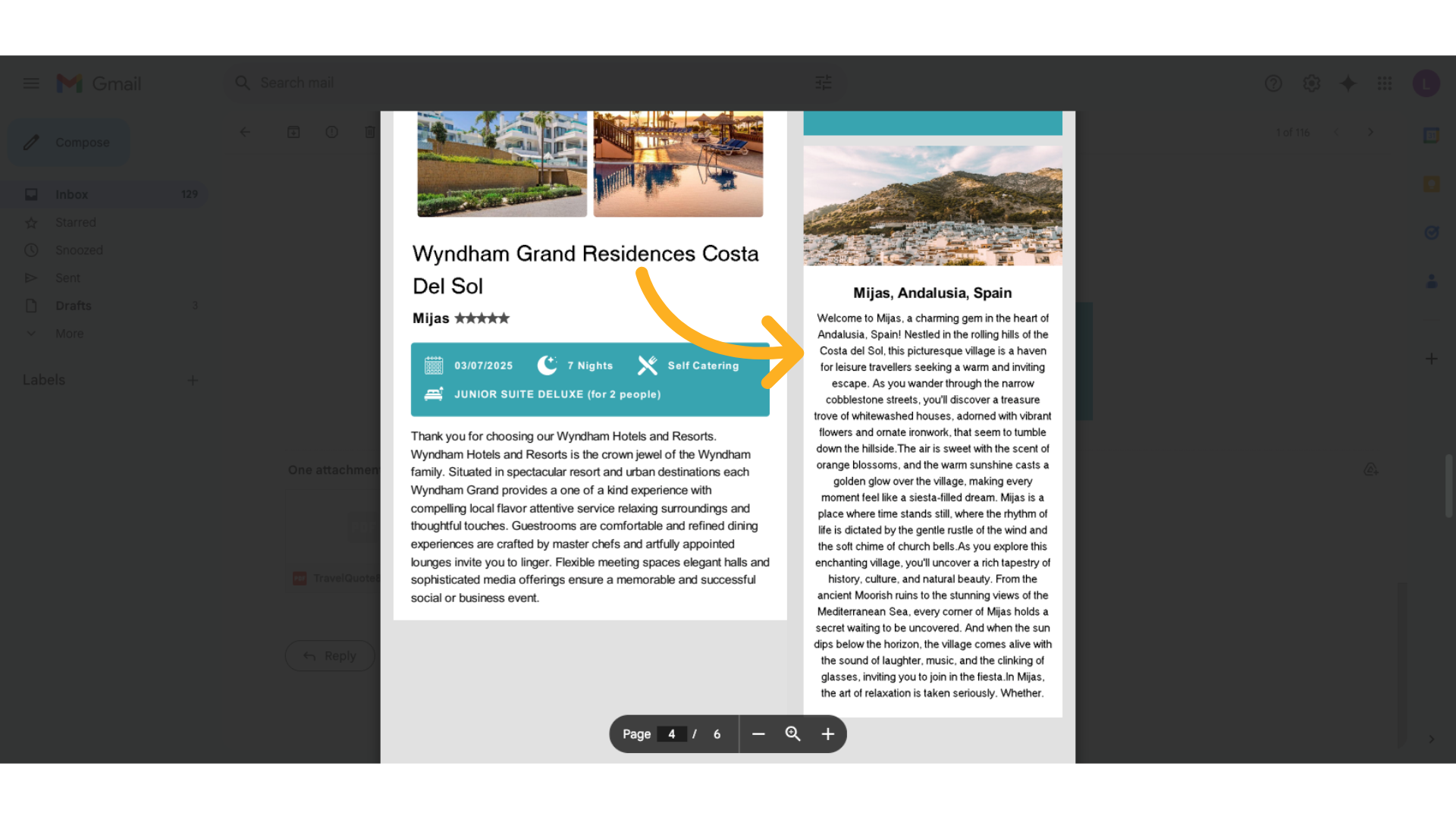
44. Destination Guide
Follow the link provided.
This guide covered essential steps for employee training in Travelify including accessing user management, uploading profile pictures, and navigating various sections. By following these instructions, users can effectively manage employee details and profiles.
VIDEO TRAINING - This widget will enable you to create a booking form that can be added to an offer page ...
Recent CMA regulations within the UK require travel companies to clearly display all charges that a customer could be liable for included in their holidays costs.
VIDEO TRAINING: At a glance, search history for your customers
VIDEO TRAINING: This tutorial guides you through configuring the Travel Balance Payment widget.
VIDEO TRAINING: Recent CMA regulations within the UK require travel companies to clearly display all charges that a customer could be liable for included in their holidays costs.
VIDEO TRAINING - The Travelgenix RSS link builder lets you display live product feeds to your audience on website pages and within marketing emails.
VIDEO TRAINING - This video will help you to create offer boxes for your website

This 30-day plan is designed to fit into a busy schedule. We aren't rebuilding the internet here; we are just making sure your travel business is seen and heard in all the right places. Think of this as a "Couch to 5K" for your website. By the end of the month, you’ll have a site that Google recognises and customers trust. Your 30-Day "Get Seen" Calendar Week 1: Setting the Foundations (The "Check-In") Focus: Telling the search engines you are open for business. Day 1: Set up Google Search Console. Submit your sitemap so Google can start "reading" your pages. Day 2: Set up Google Analytics 4. Check that it’s tracking your own visits so you know it's working. Day 3: Claim your Google Business Profile. Fill in every detail—don’t skip the phone number or the bio! Day 4: Upload 5 high-quality travel photos to your Google Business Profile. These are your "shop window" images. Day 5: Review: Look at Search Console. Has Google found any errors? If not, great—you’re officially on the map. Week 2: Solving Problems (The "Scratch the Itch") Focus: Finding out what travellers want and giving it to them. Day 8: Go to AnswerThePublic. Search for your top destination (e.g., "Skiing in France"). Pick the 3 most common questions people ask. Day 9: Write a short, helpful 300-word "Quick Guide" on your site answering one of those questions. Day 10: Use Canva to create a stunning graphic for that guide. Post it on your social media with a link back to your site. Day 11: Answer the second question from your list as a new blog post or "Expert Tip" page. Day 12: Review your Google Business Profile. Has anyone left a review? If so, reply with a friendly "Thank you!" Week 3: Building Buzz (The "Digital Recommendations") Focus: Getting the word out and looking like the expert you are. Day 15: Use Canva to create a "Top 5 Tips" checklist for a specific holiday type you sell. Day 16: Share that checklist on LinkedIn or Facebook. Ask people to tag a friend who needs a holiday. Day 17: Reach out to a local partner (maybe a luggage shop or a local cafe) and ask if they’d share your "Top 5 Tips" link on their page. Day 18: Write your third "Answer" post from your Week 2 research. Day 19: Check Google Analytics. Which of your three posts got the most clicks? This is your "winner"—write more like this! Week 4: Refining & Repeating (The "Consistency Loop") Focus: Checking the data and planning for next month. Day 22: Go back to Google Search Console. See if any new "search terms" have appeared. Are people finding you for things you didn't expect? Day 23: Update your Google Business Profile with a "Weekly Update" post about a current travel trend or a new solution you offer. Day 24: Use Canva to refresh your website’s main banner or "Hero" image. Keep it seasonal! Day 25: Look at Google Analytics. Identify the page where people "drop off" (leave the site). Read through it—is it too technical? Make it simpler and more engaging. Day 26: Plan your next 3 "Answer" topics for next month using AnswerThePublic. The "Golden Rule" for Success Don't try to do this all in one day. 20 minutes a day is far better for your business than a 10-hour sprint once a month. Google loves consistency; it shows them you are a reliable, active solution provider.

Building a successful travel website isn’t a "set and forget" project—it’s more like tending a garden. If you water it regularly, it blooms; if you leave it, the weeds take over. Here is your step-by-step guide to using those five essential tools to keep your business growing. 1. Google Search Console: Your Direct Line to Google Purpose: To make sure Google can see your pages and tell you if anything is broken. Step-by-Step: Verify Your Site: Go to Search Console and add your website URL. You’ll need to prove you own it by adding a small bit of code to your site (most website builders have a simple box for this). Submit a Sitemap: This is essentially a "map" of your site that helps Google find every page. Most sites create one automatically at yourwebsite.com/sitemap.xml. Paste that link into the "Sitemaps" section. Check for "Crawl Errors": Once a month, look at the "Indexing" report. If Google says a page can’t be found, it’s like having a broken link in your shop window. Fix it! The Result: You'll see which search terms people are using to find you. Timeline: It takes 1–4 weeks for Google to start showing your data. Ongoing Effort: Check this once a month. As you add new tours or blog posts, check here to ensure Google has "seen" them. 2. Google Analytics 4 (GA4): Your Business X-Ray Purpose: To see where your visitors come from and what they do before they book. Step-by-Step: Set Up a Property: Sign up at Google Analytics. Follow the prompts to create a "Data Stream" for your website. Install the Tag: Copy the "Measurement ID" (it starts with G-) and paste it into your website builder's analytics settings. Watch the "Acquisition" Report: Go to Reports > Acquisition > Traffic acquisition. This tells you if people are coming from Google, Facebook, or clicking links in your emails. The Result: You’ll stop guessing what works. If your Instagram posts aren't bringing visitors, you’ll know. Timeline: Data starts appearing within 24 hours. Ongoing Effort: Review this weekly. Look for which pages people stay on the longest—that’s the content they find most helpful! 3. Google Business Profile: Your Local Megaphone Purpose: To show up on Google Maps and in local search results. Step-by-Step: Claim Your Business: Go to Google Business and search for your company name. If it’s not there, create it. Fill Every Box: Add your phone number, website, and opening hours. Crucial: Add high-quality photos of your tours or your happy team. Verify: Google will usually send a postcard or ask for a quick video to prove you’re real. The Result: You’ll appear when someone nearby searches for "Travel Agent" or "Tour Operator." Timeline: You can show up within days of verification. Ongoing Effort: Post an "Update" (like a mini-blog post) once a week and reply to every single review. Active profiles rank higher! 4. Canva: Your Visual Hook Purpose: To create professional-looking images that stop people from scrolling past your brand. Step-by-Step: Pick a Template: Search Canva for "Travel Instagram" or "Travel Brochure." Customise with Your Photos : Drag and drop your own holiday photos into the template. Use your brand colours so people recognise you. Download and Share: Use the "Share" button to download high-res versions for your site or social media. The Result: Your business looks like a global powerhouse, even if you’re a team of one. Timeline: Instant. You’ll have a professional design in 10 minutes. Ongoing Effort: Use this daily or weekly. Visuals go out of date fast; keep your "shop window" fresh with new, seasonal imagery. 5. AnswerThePublic: Your Content Crystal Ball Purpose: To find out exactly what questions travellers are asking so you can provide the answers. Step-by-Step: Search Your Niche: Go to AnswerThePublic and type in a destination or service, like "Luxury Maldives" or "Walking tours London." Download the Data: It will show you a "wheel" of questions people ask (e.g., "Is the Maldives expensive in May?"). Write the Solution : Pick one of those questions and write a short, helpful article on your website answering it. The Result: You become the "expert" that Google loves to recommend. Timeline: Writing an article takes a few hours; seeing it rank on Google takes 3–6 months. Ongoing Effort: Do this once a month. Search trends change with the seasons (winter sun vs. summer city breaks), so always check what people are curious about now. The Reality Check Digital growth is a marathon, not a sprint. You won't see a flood of bookings overnight, but by using these tools consistently, you are building an "asset" that works for you 24/7.
So, you’ve launched your new travel site. It looks fantastic, the imagery is dream-worthy, and you’re ready to send people on the trip of a lifetime. The only problem? It’s a bit quiet. If your website feels like a luxury resort with no guests, don't worry. It’s a common itch for new sites, and we’re going to scratch it. Here is how we get you off the back streets and onto the high street of the internet. Why Is Nobody Seeing My Beautiful Site? (The Itch) The biggest frustration for any travel business is knowing you have the perfect solution for a holidaymaker, but they simply aren't finding you. You're competing with the giants, and Google can sometimes feel like a VIP club where you’re not on the list. The secret isn't "better tech"—it's being helpful. People don't search for "websites," they search for "where is the best place for a quiet half-term break?" or "how do I plan a trek in Peru?" When you start answering those questions, the traffic starts flowing. The Visibility Roadmap: Your 3-Step Plan 1. Talk to the Search Engines Think of Google as a giant filing cabinet. If you haven't told them you exist, they can't file you under "Amazing Travel Expert." You need to "check in" so they know your doors are open. 2. Answer the Questions Travellers Are Asking Instead of just listing prices, tell stories. Write about the "top 5 hidden beaches" or "how to pack for a safari." When you provide the answers, Google rewards you by putting you in front of the people asking. 3. Get Digital Recommendations In the travel world, word of mouth is everything. The digital version is getting other reputable websites to mention yours. It’s like a "thumbs up" that tells search engines you’re a trusted expert. The Traffic Toolkit: How to Drive Visitors Google's Front Page (Organic Search): This is the long game. By regularly adding fresh, helpful advice to your site, you’ll naturally climb the rankings. The "Scroll-Stoppers" (Social Media): Don't just post "Book Now." Post a video of a sunset or a tip on how to skip the queues at the Louvre. Give them a reason to click through to your site. The Local Map: If you have an office or a specific region you cover, appearing on the map is a "quick win" for building trust. Your Travel Tech Stack: Simple Tools for Big Results You don't need to be a coder to use these. They are your eyes and ears on the web.